
Geopolitics
21 min read
Trump's Presidency: A Crucial Reminder That Governments Should Govern, Not Police
The Age
January 18, 2026•4 days ago
AI-Generated SummaryAuto-generated
The article argues that governments should govern rather than police, citing Donald Trump's self-perception of being unconstrained as problematic. It contrasts this with politicians like Sussan Ley and Anthony Albanese, suggesting the latter finds a balance within institutional constraints. The piece criticizes the state's role in deciding acceptable speech, referencing controversies around hate speech laws and the Adelaide Writers' Week disinvitation, ultimately advocating for open discourse over governmental control.
Advertisement
Opinion
Trump a reminder that governments should govern, not police
Sean KellyColumnist
January 19, 2026 — 5:00am
January 19, 2026 — 5:00am
You have reached your maximum number of saved items.
Remove items from your saved list to add more.
Save this article for later
Add articles to your saved list and come back to them anytime.
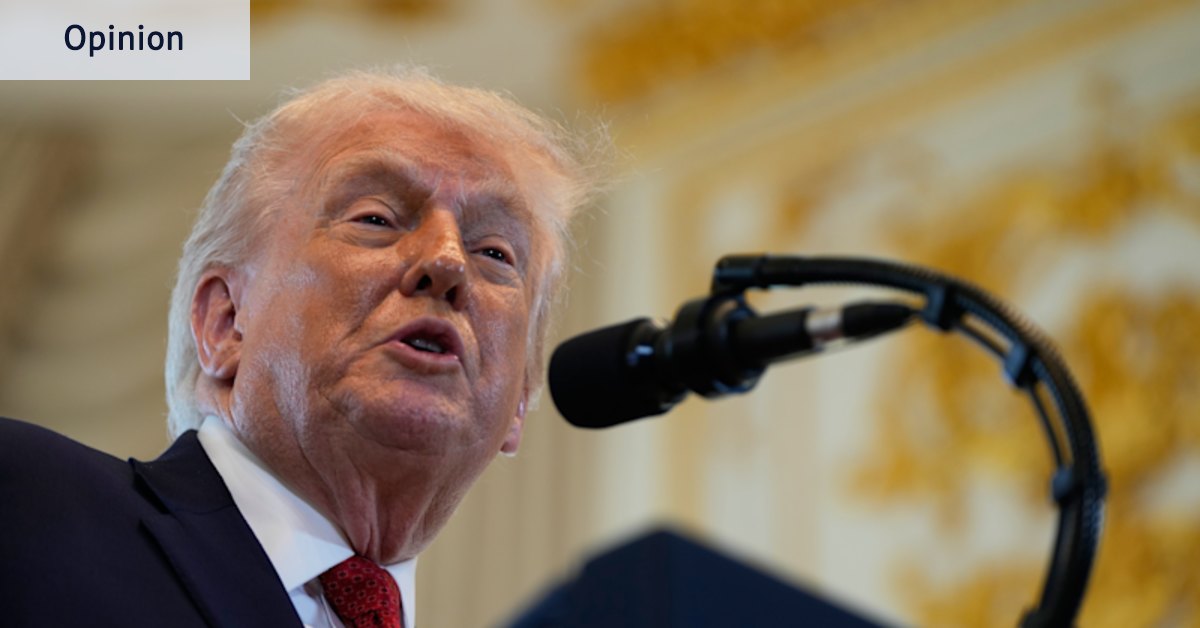
Recently, US President Donald Trump was asked whether he was constrained by international law – or anything else. “Yeah,“ he said, “there is one thing. My own morality. My own mind. It’s the only thing that can stop me.” Which was a concise illustration of the problem with his presidency.
We expect politicians to do two things. First, to be true to themselves. Second, we expect them to play the role to which we have elected them – including acting within the constraints imposed by that role. With Trump, we have had too much Trump, not enough president.
Sussan Ley provides the opposite example. After eight months as opposition leader, Ley the individual has more or less disappeared. Her complete reversal on hate speech laws – the government was apparently too slow to act, until, suddenly, it was too fast – showed that she has become a symbol only. The path of least resistance through the Coalition: that is what “Sussan Ley” has come to mean.
The two expectations – personal and institutional – are often in conflict. A successful politician finds a balance.
Advertisement
That is why I doubt Anthony Albanese’s twin backdowns will hurt him much in the long run. One of his political strengths has been to understand the effect of time. He endured two years of political damage caused by inflation, seeing that at some point it would end. For all the talk of the “25 days” it took him to call a royal commission, the important fact – in the long run – is likely to be the fact he called it. And that is in part because, on both the commission and the issue of hate speech laws – on which he at least partially retreated on Saturday – he accepted the constraints of his role.
This, for the rest of us, is a good thing. Those of us without institutional power should always be on the side of constraining those with power. This is the single largest issue with the government’s attempts to change hate speech laws.
It is reasonable to be concerned about hate speech. But we need to consider how this works. As Peter Kurti of the Centre for Independent Studies wrote: “In practice, the state will be asked to decide which ideas are tolerable, which beliefs are acceptable and which moral claims are too dangerous to be spoken aloud.”
A friend of mine put it this way: “Do we want police and prosecutors to be deciding what we can say?” More than they already do, that is.
This question – who we want to make decisions about speech – is also at the heart of the Adelaide Writers’ Week fiasco.
Advertisement
The debate around the decision to disinvite Dr Randa Abdel-Fattah began in an awful place, when the festival board chose to be disastrously vague in its public announcement. This meant much of the debate immediately became abstract and confused. The decision quickly became seen as an attack on “free speech”, when of course every festival director makes decisions about what they judge acceptable or productive.
Meanwhile, Abdel-Fattah’s critics accused her of “hypocrisy” for seeking to cancel others. But Abdel-Fattah herself was not arguing for free speech, but for oppressed voices to be heard instead of voices she believed harmful. That is an argument about which voices need amplification. You might disagree, but it is not hypocritical.
Those of us without institutional power should always be on the side of constraining those with power.
And this is really the crucial point: you might disagree. It is remarkable that we have ended up debating every single thing Abdel-Fattah has said – but in front of millions of Australians rather than the hundreds who might have attended a single festival session. That means we can now ask – with evidence – whether that debate was as dangerous as it seemed to some, including the South Australian premier. Has this discussion been disastrous? Or has it, perhaps, been a useful thing – a dragging into the public sphere of matters too long suppressed, with arguments for and against given ample ventilation?
As I’ve read commentary this last week, I have often found myself thinking that the person writing is really saying, “This is not the decision I would have made.” If they were in director Louise Adler’s role, they would or would not have programmed Abdel-Fattah. If they were on the festival board, they would or would not have appointed Adler or rescinded the invitation.
Advertisement
These are reasonable discussions. But they are not the nub of the matter. The issue isn’t whether Adler was right. The issue is whether she should have been overruled.
This brings us back to the question of roles.
First, arts festivals play a particular role – similar to universities. They do this on our behalf. We need artists and academics to make arguments the rest of us have not had time to think through; or that we have not been brave enough to voice.
Second, a festival director is appointed so that they can consider such issues, cognisant of all factors. It is a dangerous thing to replace their judgment with the judgment of others, be they a board member or a premier or, as the Kennedy Centre debacle showed, the president of the United States.
Advertisement
The people in those roles face a different set of pressures that have nothing to do with the curation of a thoughtful festival program. Richard Flanagan recently wrote on this topic that “writers, if they are doing their work properly, rub against the grain of conventional thinking”. Politicians make a virtue of conventional thinking and are therefore the worst possible people to make decisions about art.
At different times these past years, an awkward national silence has fallen: first, during the Voice debate, then following October 7. Disagreement can be difficult, but a failure to discuss serious, important matters is more harmful over time. We could all do with our politicians talking less. Society might benefit if everyone else was able to talk a little more.
Sean Kelly is author of The Game: A Portrait of Scott Morrison, a regular columnist and a former adviser to Julia Gillard and Kevin Rudd.
You have reached your maximum number of saved items.
Remove items from your saved list to add more.
More:
Political leadership
Opinion
For subscribers
Anthony Albanese
Donald Trump
Louise Adler
Sussan Ley
Sean Kelly is author of The Game: A Portrait of Scott Morrison, a regular columnist and a former adviser to Julia Gillard and Kevin Rudd.Connect via Twitter.
Rate this article
Login to rate this article
Comments
Please login to comment
No comments yet. Be the first to comment!