
Geopolitics
9 min read
The Shifting Global Economy: A Realignment Without the U.S.?
marketplace.org
January 20, 2026•2 days ago
AI-Generated SummaryAuto-generated
The global economy is undergoing a significant realignment, with countries forming new trade partnerships independent of the U.S. Deals between Canada and China, and the EU and MERCOSUR, exemplify this shift. U.S. protectionist policies and perceived unreliability are prompting allies to seek alternative alliances, potentially impacting American economic growth and the dollar's dominance.
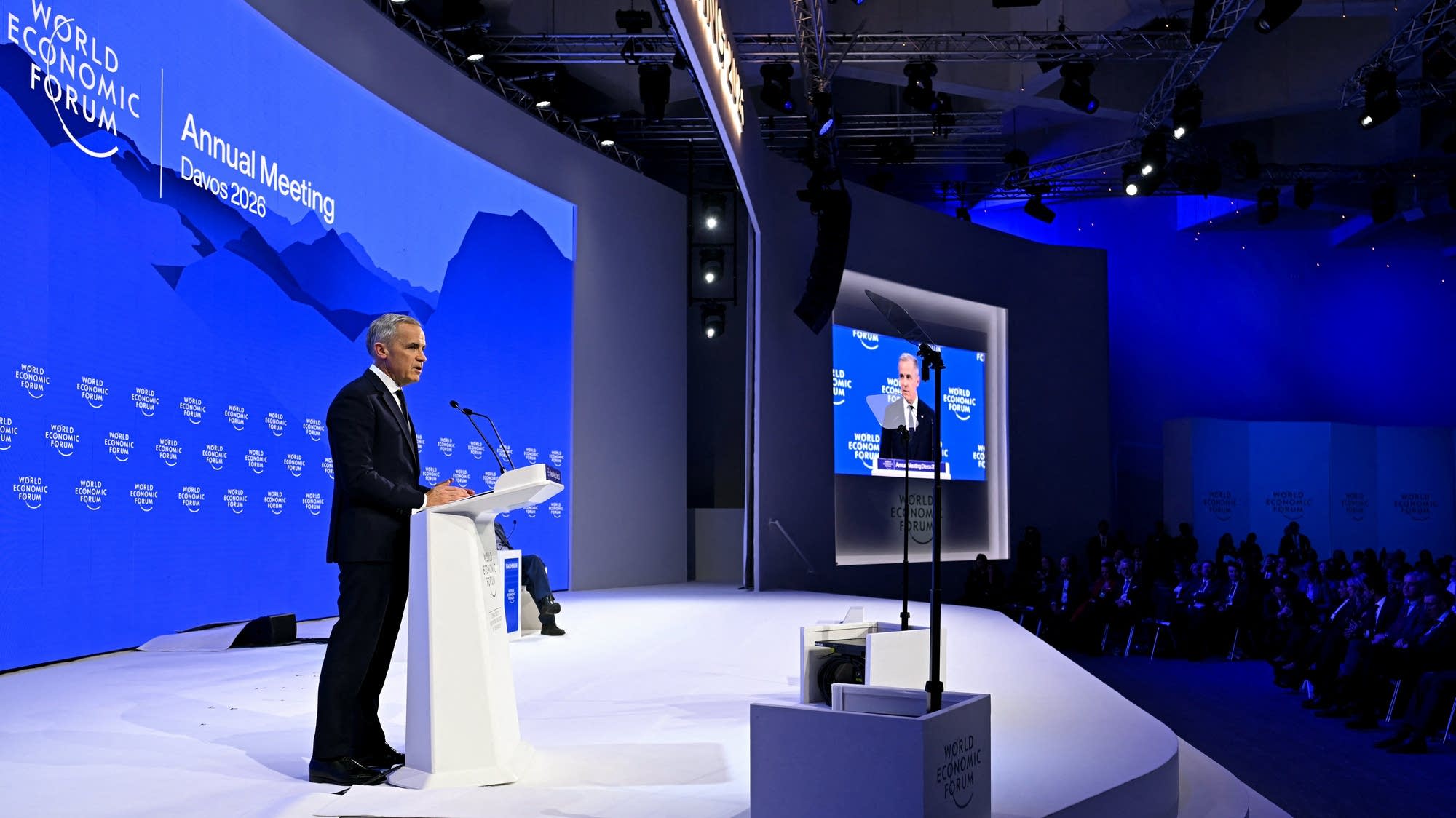
Canadian Prime Minister Mark Carney told the World Economic Forum Tuesday: "The old order is not coming back.” His statement underscored a geoeconomic realignment happening across the globe.
Canada just cut a trade deal with China. The European Union and the South American trade bloc MERCOSUR finally signed a free trade agreement that’s been many years in the making.
As the U.S. vies to take Greenland under the threat of tariffs, it really is a “with friends like these” kind of moment for historic U.S. allies, as they turn elsewhere for partnerships.
The U.S. is paying a political price after decades of globalization. This didn’t happen in a vacuum, said David Gantz, a fellow in trade and international economics at Rice University’s Baker Institute for Public Policy.
“A lot of people have been left behind, and governments, the U.S., Canada, Europe, have not done a very good job of dealing with the people left behind from the shift in manufacturing elsewhere,” he said.
But as Bill Reinsch, senior adviser at the Center for Strategic and International Studies, pointed out, President Trump’s protectionism isn’t stopping globalism.
“Trade is increasing, but it's rearranging or realigning, and what's happening is basically countries are moving on without the United States,” he said.
Look at the EU and South America, China and Canada, or the U.K. and India.
“We're not a reliable partner anymore, and there's no better example of that than what, what he's doing with his Greenland tariff issue,” Reinsch said.
So far, Americans haven’t yet seen a major retaliation from our trading partners. But Reinsch said decisions the U.S. makes today could hinder future economic growth.
“We're a mature, slow growth economy. If companies here want to grow fast, they have to export,” he said. “And what Trump is doing is effectively cutting them off from that.”
There’s the global financial system to think of, too. Doug Rediker, a senior fellow at The Brookings Institution, said for now, there is no substitute for the U.S. dollar.
“But, if you accelerate the rest of the world's search for an alternative, they're going to find one, and at that point, once the dollar ceases to be the dominant sole global trading and reserve currency, then a lot of things Americans have taken for granted in terms of both the benefits to the economy of that dollar and the weapons we use, sanctions and other tools, start to go away,” he said.
And of course, there are the impacts on American workers and businesses.
“It's literally prices, it's job opportunities, it's availability. It is supply chain, disruptions,” Rediker said.
He expects the U.S. is in store for more trade war-related pain — not less.
Rate this article
Login to rate this article
Comments
Please login to comment
No comments yet. Be the first to comment!