
Economy & Markets
20 min read
Germany Reintroduces EV Subsidies: A Deep Dive into the New Policy
DW.com
January 19, 2026•3 days ago
AI-Generated SummaryAuto-generated
Germany has reintroduced electric vehicle subsidies, offering between €1,500 and €6,000. While welcomed by the auto industry and some groups, environmental organizations criticize the inclusion of hybrid vehicles. Separately, the IMF offered an optimistic economic outlook for Germany, and Chancellor Merz dismissed reports of cabinet reshuffling. A court ruled against full face coverings while driving.
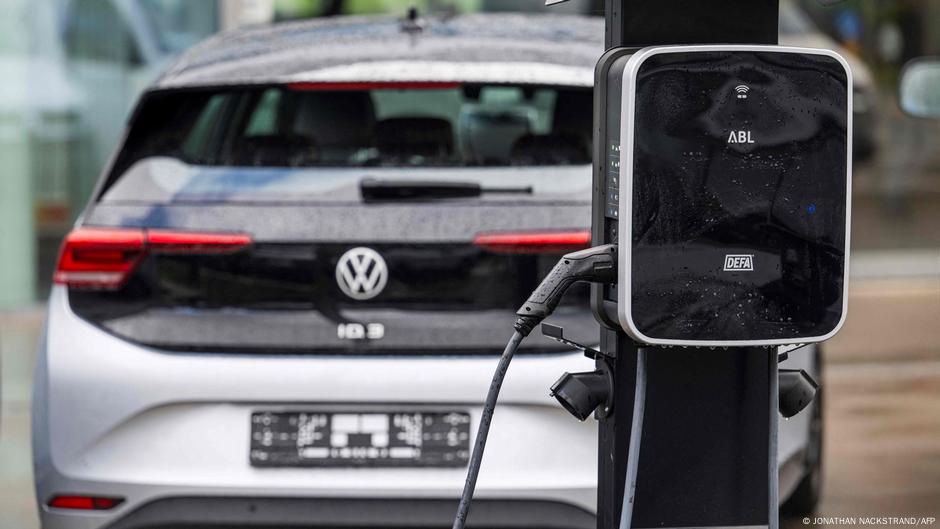
Several years after the previous subsidies for electric vehicles were scrapped, the coalition government of CDU/CSU and SPD has brought them back.
However, the Greens and environmental groups have criticized the new policy for including hybrid vehicles which have much higher emissions than just pure EVs.
Meanwhile, the International Monetary Fund (IMF), has made a more optimistic prediction about the German economy than even some German institutions.
Follow along for the latest coverage of what Germany is talking about on Monday, January 19. You can catch up with the weekend's news here.
German Chancellor Friedrich Merz on Monday dismissed a media report about alleged plans to reshuffle his Cabinet.
"I have no intention of reshuffling the federal Cabinet," said Merz on Monday after a meeting of his Christian Democratic Union party's executive committee.
"I am satisfied with the work of the federal Cabinet," said Merz, calling the rumors "nonsense."
Merz's comments came in response to a report in Germany's Spiegel magazine about major personnel changes in his administration.
Merz is said to be particularly dissatisfied with parliamentary group leader Jens Spahn, largely seen as responsible for a series of political gaffes in the Bundestag, Germany's lower house, last year.
Nevertheless, Merz insists he has a "good and trusting working relationship with Jens Spahn."
Merz recently shook up his team after just eight months in office when Jacob Schrot was succeeded as chief of staff by Philipp Birkenmaier, an economic expert.
German Environment Minister Carsten Schneider has welcomed a new raft of electric vehicle subsidies which he says will be a "major boost" for the country's auto sector.
"This is a program with which we are doing something for the environment, for the automotive industry, but especially for families who otherwise couldn't afford a new, environmentally-friendly car," he said.
The new subsidies allow consumers to claim between €1,500 ($1,743) and €6,000 in government aid to buy an electric vehicle, with eligibility extending up to a maximum income of €90,000 for households with two children.
"[This is] a boost for our domestic automotive industry, which offers powerful electric cars," said Schneider, adding: "This year, more and even more affordable models from German manufacturers will come onto the market."
Germany's largest trade union, IG Metall, welcomed the news, with chairwoman Christiane Benner saying it was "only right that people on lower incomes receive higher subsidies."
But environmental groups as well as Germany's opposition Green Party have criticized the fact that the subsidies will also apply to plug-in hybrids — cars that run on both electricity and fossil fuels — and vehicles with range extenders.
"In practice, plug-in hybrids emit up to five times more CO2 and therefore offer hardly any climate advantages compared to conventional combustion engines," said Jürgen Resch from the Environmental Action Germany (Deutsche Umwelthilfe or DUH) non-profit.
There has also been criticism from other sectors who fear that government subsidies for electric vehicles will have the effect of funneling consumers' limited spending power into car purchases at the expense of other industries.
"This kind of government-driven consumer spending does more harm than good," argued Jan Kurth, Managing Director of the Association of German Furniture Industry groups. "Consumers can only spend their money once," he said.
Germany's Porsche pauses shift to EVs as profits tank
To view this video please enable JavaScript, and consider upgrading to a web browser that supports HTML5 video
As the western German city of Cologne gears up for the climax of its carnival season in February, its only Jewish carnival association has reported receiving an antisemitic email.
According to Aaron Knappstein, chairman of the "Kölsche Kippa Köpp" ("Cologne Kippa Heads" in the local dialect), an anonymous author took issue with the association's carnival motto, "Mer dun et för Kölle" ("We do it for Cologne"), claiming that city isn't the association's home and that the motto ought to be: "Mer dun et för Israel" ("We do it for Israel").
"I have no idea who it's from," said Knappstein, who founded the association in 2017 marking the reestablishment of a Jewish carnival club for the first time since the Second World War.
"We've never experienced antisemitic hostility before, either as a group or as individuals. This is the worst that has happened to us."
On its official website, the Kölsche Kippa Köpp state that they celebrate carnival just like everybody else in Cologne. "We're part of the Cologne carnival family and want to show that Jewish life is anchored firmly and jovially in the city's civil society and its carnival."
However, despite an invitation last year, the group is yet to take part in the highlight of the carnival calendar, the Rosenmontagszug (Rose Monday parade). "I don't think that would be a good idea at the moment," lamented Knappstein, referring indirectly to reports of growing antisemitism in Germany. "I would never be able to forgive myself were something to happen."
Nevertheless, he said the Kölsche Kippa Köpp had received many messages of support since the publication of the antisemitic email, including from the official carnival committee.
"Most people react to us positively," he said, suggesting that antisemites probably don't have much to do with carnival anyway. "We're in a little bubble."
Muslim women in Germany are not allowed to wear full face coverings while driving, according to a ruling handed down by a court in the southern state of Baden-Württemberg on Monday.
A Muslim lady in the city of Mannheim had argued that her religion requires the wearing of a full face-covering, known as a niqab, in public and that, as a mother of six, she was reliant on her car when going about her daily life.
But the judge decided that German traffic code (StVO) rules banning face-coverings take precedence over the right to religious freedom since they are designed to ensure the safety of other drivers on the roads.
However, the court also found that an initial ban on face-coverings issued by the German transport ministry was also problematic, since it didn't sufficiently take into account religious freedoms.
The ministry must therefore reconsider the complainant's appeal while explicitly considering her right to religious freedom — but this is still unlikely to result in a different outcome.
Rate this article
Login to rate this article
Comments
Please login to comment
No comments yet. Be the first to comment!