
Space & Astronomy
5 min read
Ganymede's Shadow Transit Across Jupiter: A Stunning Jan 21 Sky Event
Astronomy Magazine
January 21, 2026•1 day ago
AI-Generated SummaryAuto-generated
On January 20, Ganymede, Jupiter's largest moon, transited the planet's face, accompanied by its shadow. The event began before 4 A.M. EST, with optimal viewing conditions for the Pacific Coast. This celestial alignment offered a significant astronomical spectacle for observers with telescopes.
Looking for a sky event this week? Check out our full Sky This Week column.
January 20: Comet Schaumasse slides by some galaxies
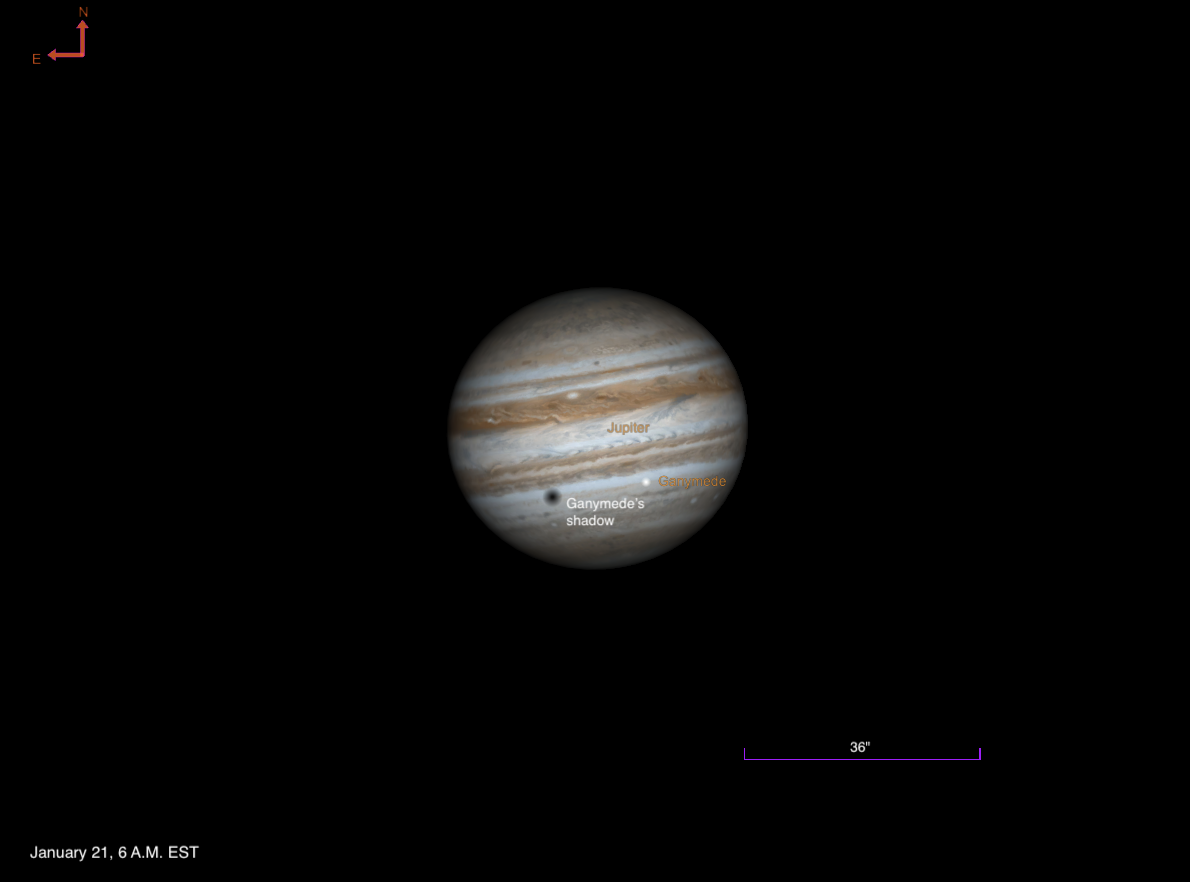
Ganymede transits the face of Jupiter this morning, trailed by its large shadow. The event starts just before 4 A.M. EST, as Jupiter is slowly setting in the west for much of the U.S. (The planet is still high in the southwest for those on the Pacific Coast, who will have the best views of the entire transit.)
Jupiter hangs beneath the bright star Pollux in Gemini — in fact, the gas giant outshines the star, making it the brightest point of light in the Twins by far. Train your telescope on Jupiter and you’ll see that before the transit starts, all four Galilean moons are lined up on the planet’s eastern side. Callisto is farthest away, with Europa slightly closer, followed by Io; Ganymede sits closest to the planet’s southeastern limb. Ganymede begins to transit at 3:51 A.M. EST, moving from east to west across the large world’s face. It takes more than an hour for its shadow to appear, around 4:58 A.M. EST, as Ganymede is nearing the halfway point in its journey.
Ganymede’s transit ends shortly after 6 A.M. CST, with the planet only 5° high in the Midwest and only about an hour to go before sunrise there as well. The shadow finally disappears from Jupiter’s southwestern limb around 6:20 MST, visible only in the western half of the U.S. (and again, best seen from the West Coast).
Rate this article
Login to rate this article
Comments
Please login to comment
No comments yet. Be the first to comment!