
Space & Astronomy
17 min read
Bark Beetle Fungus: The Culprit Behind Spreading Dutch Elm Disease
Earth.com
January 19, 2026•3 days ago
AI-Generated SummaryAuto-generated
New research reveals elm bark beetles carry two fungi responsible for Dutch elm disease. Scientists found these fungi, Ophiostoma novo-ulmi and Geosmithia spp., consistently present on adult beetles in Italy. The mix of fungi on beetles varied with outbreak intensity, suggesting Geosmithia might influence disease spread, though its role is complex.
Elm trees are vanishing across the Northern Hemisphere, often dying within a single season after an unseen encounter.
New field evidence from central Italy shows that a common insect moving between trees routinely carries two fungi with very different effects on elm survival.
During multi-season trapping in Tuscany, scientists collected 7,150 elm bark beetles, small wood-boring insects that live and reproduce beneath elm bark, and analyzed the fungi they carried between trees.
Across hedgerows and field edges, black funnel traps caught adult elm bark beetles as they left dying elms for fresh twigs.
The project ran through the National Research Council of Italy (CNR), supporting long-term forest health monitoring.
The work was led by Alessia L. Pepori, Ph.D., at CNR, whose research tracks how insects move tree-killing fungi through forests.
By sampling from spring through early fall, the team could compare what beetles carried in healthier stands and outbreak zones.
Beetles, fungi, and elm tree disease
Feeding scars in twig crotches let the fungus enter, and this process drives Dutch elm disease, a fast wilt in elms.
The fungus spreads through water-conducting vessels and the elm clogs those pipes with its own defenses, cutting off water flow.
Leaves on one branch often yellow and curl first, and brown streaks can appear in sapwood under peeled bark.
Beetles start many infections, yet shared roots can also move the fungus between neighboring elms and speed local losses.
Alongside Ophiostoma novo-ulmi, beetles also carried Geosmithia spp., fungi that share galleries under elm bark.
“Our results show that, independent of the epidemiological conditions, both fungi are always present on the body of adult insects,” wrote Pepori.
Because every adult carried both fungi, each flight spread a mixed set of spores capable of starting new infections on fresh twigs.
That constant pairing raises the odds of fungal contact, yet forests decide risks through temperature, moisture, and the beetle life cycle.
Counting DNA on insects
To measure those hitchhiking fungi, the researchers ground small pools of beetles and extracted DNA from the bodies.
They used a sensitive DNA test that measures how much genetic material is present in a sample.
The analysis picked up both fungi in one pass, even when genetic material was barely detectable.
Site comparisons showed that the mix of the two species changed with outbreak intensity across Tuscany, even when beetles kept flying.
In areas where disease remained limited, Geosmithia DNA exceeded O. novo-ulmi by more than five-to-one on adults.
Areas with active outbreaks flipped that pattern, with the pathogen slightly higher, while areas where most elms had already died carried low amounts of both strains.
These contrasts suggest the second fungus may thrive when elms still look healthy, but the relationship does not stop outbreaks alone.
Two waves in one summer
Flight traps captured two clear surges each season, with adults peaking in mid-July and again in late August.
Beetles began appearing when weekly temperatures reached about 61 degrees F, while fungal levels rose later as summer heat intensified.
DNA levels on bodies climbed through August and peaked in the second half of the month, matching the second beetle wave.
Seasonal temperature likely shapes which fungus multiplies in galleries, setting up different spore loads for the next generation.
Females carry heavier loads
Sex mattered because traps caught up to 10% more females, and the females often carried more Geosmithia DNA later in the season.
Female Scolytus multistriatus typically colonize breeding sites first, so their bodies spend more time in fresh galleries where fungi grow.
In late sampling periods, the study measured significantly higher Geosmithia loads in females than males, while pathogen loads stayed similar.
That difference points to females as an important target for monitoring, but it does not yet explain why some sites avoid epidemics.
A fungus that attacks fungi
Laboratory co-cultures have shown Geosmithia can act as a fungus that feeds directly on other fungi.
Microscopy experiments found close contact between the fungi, and co-inoculation reduced disease severity in elms.
In nutrient-poor settings, the parasite behavior may strengthen, yet rich bark tissue could weaken that effect outside the lab.
Using a living biocontrol would require field trials, because added fungi can also affect non-target microbes and insects.
Elm tree disease lessons from fungi
Control efforts still rely on removing dead and infected wood, because beetles breed there before moving to healthy twigs.
Sanitation works best when crews remove diseased wood quickly and disrupt beetle breeding before adults disperse to new trees.
CNR teams could use fungal ratios on trapped beetles to identify areas where the pathogen is starting to spread.
Even with better monitoring, long-term relief will depend on resistant elm varieties and steady removal of breeding material.
Taken together, the results link beetle seasonality, fungal mix, and site condition into one picture of how outbreaks build.
Future field tests by CNR and partners will need to show whether boosting Geosmithia can reduce infections without new ecological costs.
The study is published in Ecosphere.
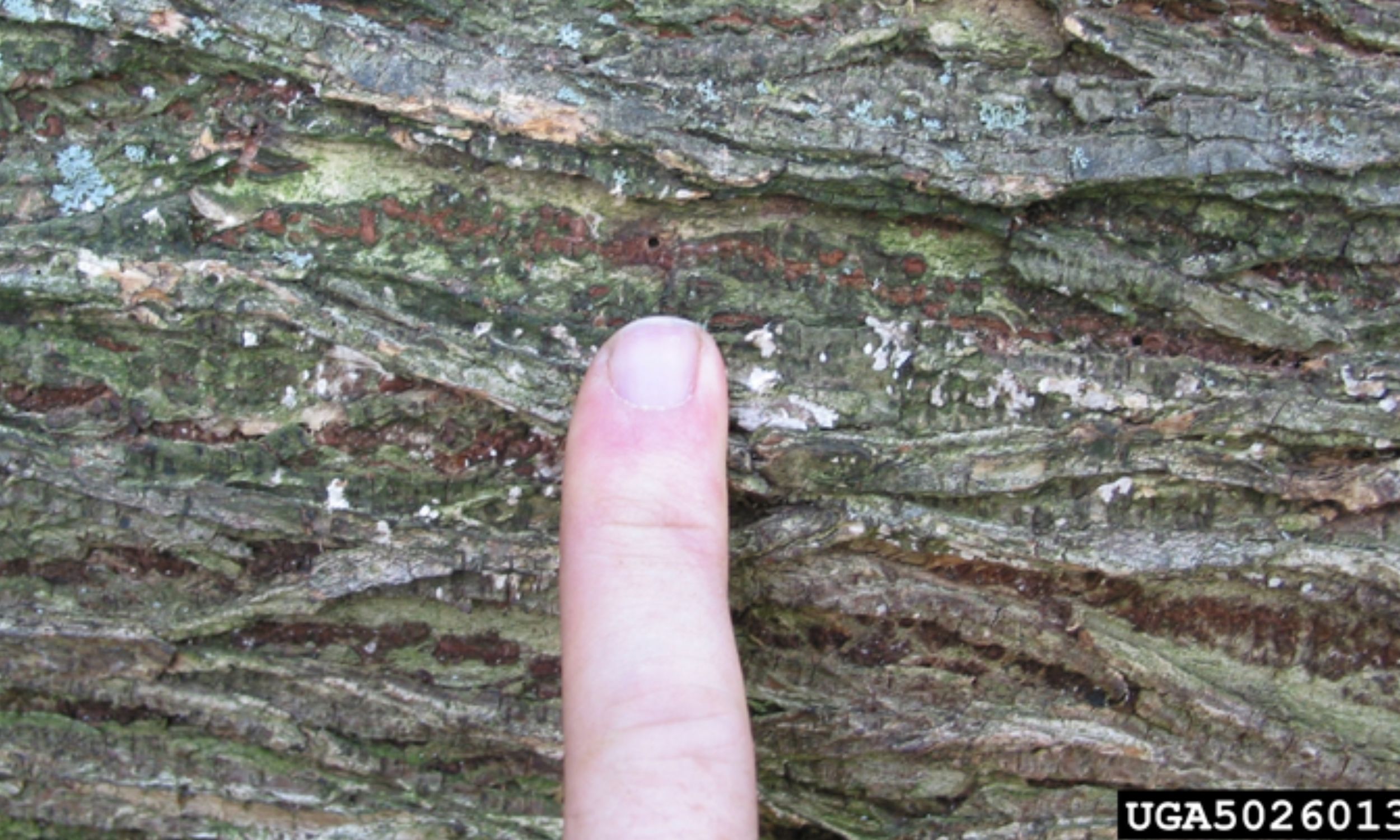
Image credit: Joseph LaForest, University of Georgia, Bugwood.org
—–
Like what you read? Subscribe to our newsletter for engaging articles, exclusive content, and the latest updates.
Check us out on EarthSnap, a free app brought to you by Eric Ralls and Earth.com.
—–
Rate this article
Login to rate this article
Comments
Please login to comment
No comments yet. Be the first to comment!