
Real Estate
35 min read
Fractional Ownership & REITs: Democratizing Commercial Real Estate in India
The Economic Times
January 20, 2026•2 days ago
AI-Generated SummaryAuto-generated
Fractional ownership and REITs are democratizing commercial real estate investment in India, allowing broader investor access. Developers are focusing on integrated business districts with strong infrastructure and walk-to-work ecosystems. The Delhi-NCR office leasing market remains robust, driven by demand for high-quality spaces from diverse sectors, indicating a maturing market prioritizing asset quality and long-term income.
Synopsis
India's commercial real estate is evolving with fractional ownership and REITs democratizing access to institutional-grade assets. Developers are focusing on integrated global business districts with strong infrastructure and walk-to-work ecosystems. The Delhi-NCR office leasing market remains robust, driven by demand for high-quality spaces from diverse sectors.
As India’s commercial real estate market evolves beyond traditional ownership models, new investment structures are opening the door for a wider set of investors.
Fractional ownership platforms and REITs are increasingly enabling retail and HNI investors to participate in institutional-grade commercial assets that were once accessible only to large corporates and funds.
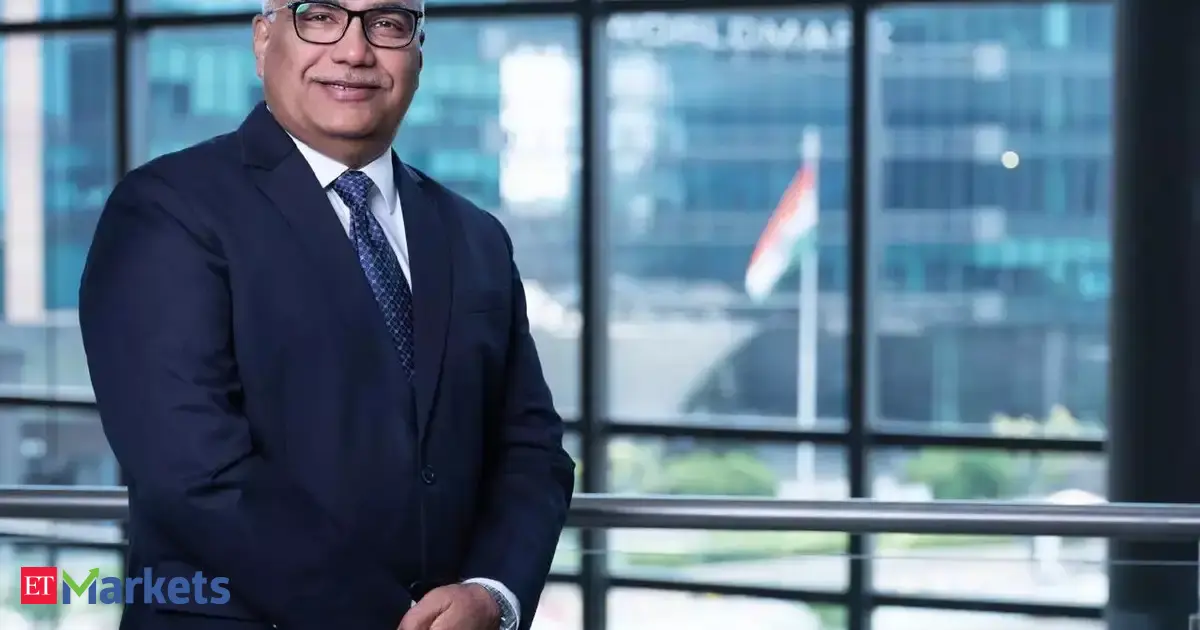
In this interview, S.K. Sayal, MD & CEO of Bharti Real Estate, explains how these models are democratising access to high-quality leased assets, improving transparency and liquidity, and reinforcing the importance of asset quality, governance and long-term income stability in India’s maturing commercial real estate ecosystem. Edited Excerpts -
Q) Thanks for taking the time out. Do you see India developing more such globally competitive business districts, and what factors will determine their long-term success?
A) India is currently at a significant juncture of transformation. We are transitioning from the traditional paradigm of isolated office complexes to fully integrated global business districts.
Observe the developments at Worldmark in Aerocity, New Delhi, which demonstrate the potential of establishing a strong foundation: connectivity, infrastructure, and a comprehensive approach to creating an optimal work environment.
Live Events
I anticipate the emergence of additional such hubs, especially in the vicinity of key airports and transportation corridors. Those that succeed will have mastered several key elements: meticulously designed architecture and space planning, authentic multimodal connectivity, access, and consequently, the concentration of talent.
And there must be authentic walk-to-work ecosystems that enable individuals to conduct their daily activities without the necessity of using a vehicle.
What is frequently underestimated is the importance of the softer infrastructure, including hotels, restaurants, retail establishments, and public spaces that contribute to making a district not merely functional, but truly habitable.
Contemporary enterprises, particularly those operating on a global scale, likewise seek spaces that fulfil ESG criteria, possess a robust digital infrastructure, and exhibit modern design.
Globally renowned districts that successfully implement this combination including our Global Business District at Worldmark, Aerocity, New Delhi, will experience enduring demand and appreciation.
Q) What is your outlook on office leasing activity in Delhi-NCR through 2025, and which sectors are currently driving incremental demand?
A) The prospects for Delhi-NCR remain notably robust through 2025 and will continue through 2026, due to a definitive preference for high-quality offerings. Occupiers are progressively consolidating into distinguished developments within integrated districts such as Worldmark, which provide enhanced connectivity, wellness-oriented design, and advanced technological integration.
Generally, Global IT and ITeS are regarded as primary demand drivers, with incremental leasing being reported by global capability centres, BFSI institutions, consulting firms, and emerging manufacturing-related enterprises.
Nevertheless, with Worldmark, we have observed a highly diverse range of consumers. From globally renowned enterprises across financial services, automobiles, banking, and technology, to aerospace and aviation, manufacturing, and numerous other sectors.
These occupants have indicated a preference for Worldmark due to its extensive, contiguous spaces within a globally recognised ecosystem that can serve as a long-term headquarters and strengthen brand identity.
Flexible workspace providers are also experiencing rapid expansion within these ecosystems. Hybrid work has not diminished the significance of office spaces; rather, it has increased the demand for fewer but higher-quality locations.
Given the restricted availability of premium assets in key micro-markets, rental growth and occupancy rates are anticipated to remain robust.
Q) Fractional ownership in commercial real estate is gaining traction among retail and HNI investors. How do you view this trend from a developer’s perspective?
A) As investors look beyond traditional home ownership, demand is rising for structures that offer income visibility, professional management, and liquidity—without the high entry barriers of direct property investments.
The increasing prevalence of regulated fractional ownership and REITs signify the evolution of India's commercial real estate investment sector. They play a pivotal role in democratising access to institutional-grade real estate.
These models expands the investor base and enhances market liquidity, while emphasising the significance of transparency and asset performance.
For developers dedicated to premium leased commercial assets, this trend is promising, as it recognises disciplined development, proficient asset management, and stable income sources.
Although fractional ownership does not serve as a substitute for REITs or institutional capital, it can effectively complement them when structured around stabilised, income-producing assets.
Q) What safeguards should investors look for when evaluating fractional commercial real estate opportunities, especially in terms of asset quality and lease stability?
A) When assessing fractional commercial real estate, investors should emphasise underlying fundamentals rather than superficial yield figures. Asset quality is of utmost importance, encompassing impeccable construction standards, robust technical specifications, adherence to regulatory requirements, and a demonstrated track record of reputable developers.
Lease stability is equally vital and should be evaluated based on tenant creditworthiness, lease duration, escalation provisions, vacancy risk, and the involvement of blue-chip or multinational occupants.
Long-term tenancies with tenants who have made significant fit-out investments generally provide enhanced income stability.
Robust governance is essential, featuring well-defined SPV structures, transparent reporting practices, independent trusteeship, and clearly articulated exit strategies. Priority should be assigned to operational, income-producing assets that are ESG-certified and professionally managed to guarantee sustainable long-term value.
Q) Looking ahead to 2026, which macro factors are likely to shape India’s commercial real estate cycle?
A) Numerous macroeconomic factors will influence the trajectory of the commercial real estate cycle as it progresses towards 2026. Interest rate stability will facilitate capital deployment, while ongoing FDI inflows—especially into services, financial asset management, GCCs, and manufacturing-related sectors—will stimulate occupier demand.
Infrastructure-driven urban development, including improved airport, metro, and regional rail connectivity, will disproportionately advantage integrated districts such as Worldmark, which are situated at multimodal transit centres.
Global supply chain diversification and India's increasing prominence as a global enterprise centre will continue to bolster demand. Importantly, the forthcoming cycle will be influenced less by speculation and more by intrinsic demand, prudent balance-sheet management, and long-term investment.
Q) How should long-term investors position themselves across office, retail, and mixed-use assets over the next 18–24 months?
A) Over the forthcoming 18 to 24 months, long-term investors are advised to pursue a selective, quality-focused investment approach.
In the office sector, focus should be on institutional-grade assets located in established or emerging commercial districts, characterised by robust tenant covenants and extended lease durations.
Retail investments should continue to prioritise high-end, experience-driven locations that capitalise on enduring consumption patterns, rather than discretionary formats.
Mixed-use developments present an attractive risk-adjusted opportunity through the diversification of income sources across office, retail, and hospitality sectors, thereby strengthening asset resilience. Across various asset classes, investors should emphasise clarity of cash flows, adherence to ESG standards, and the importance of professional asset management.
This phase focuses less on market timing and more on establishing exposure to assets aligned with India's long-term urbanisation, enterprise expansion, and infrastructure-driven development trajectory.
Q) Finally, what gives you the most confidence about India’s commercial real estate story over the next decade?
A) Our confidence in India's commercial real estate sector derives from its robust foundational fundamentals—steady economic growth, a youthful and competent labour force, increasing integration of global enterprises, and ongoing infrastructure development.
India has transitioned from a cost-effective destination to a prominent strategic global business centre. The emergence of the Global Business District by Worldmark exemplifies this transformation, where work, lifestyle, consumption, and collaboration coexist harmoniously.
The sector is progressing towards maturity, with increased focus on transparency, ESG adherence, and institutional ownership. Over the coming decade, value generation will be predominantly guided by ecosystem-driven development rather than short-term fluctuations, ensuring sustained visibility and resilience.
(Disclaimer: Recommendations, suggestions, views, and opinions given by experts are their own. These do not represent the views of the Economic Times)
(You can now subscribe to our ETMarkets WhatsApp channel)
(What's moving Sensex and Nifty Track latest market news, stock tips, Budget 2025, Share Market on Budget 2025 and expert advice, on ETMarkets. Also, ETMarkets.com is now on Telegram. For fastest news alerts on financial markets, investment strategies and stocks alerts, subscribe to our Telegram feeds .)
Subscribe to ET Prime and read the Economic Times ePaper Online.and Sensex Today.
Top Trending Stocks: SBI Share Price, Axis Bank Share Price, HDFC Bank Share Price, Infosys Share Price, Wipro Share Price, NTPC Share Price
...moreless
(You can now subscribe to our ETMarkets WhatsApp channel)
(What's moving Sensex and Nifty Track latest market news, stock tips, Budget 2025, Share Market on Budget 2025 and expert advice, on ETMarkets. Also, ETMarkets.com is now on Telegram. For fastest news alerts on financial markets, investment strategies and stocks alerts, subscribe to our Telegram feeds .)
Subscribe to ET Prime and read the Economic Times ePaper Online.and Sensex Today.
Top Trending Stocks: SBI Share Price, Axis Bank Share Price, HDFC Bank Share Price, Infosys Share Price, Wipro Share Price, NTPC Share Price
...moreless
Why IndiGo got away with peanuts penalty after causing misery
Can this IPO-bound company step out of Flipkart’s shadow?
For a future, Hindustan Copper is reviving what it junked in past
RBI is easing, but India’s long-term rates tell a different story
Stock Radar: SBI hits fresh record high in January 2026; time to buy or book profits?
Stock picks of the week: 5 stocks with consistent score improvement and upside potential up to 35%
1
2
3
Rate this article
Login to rate this article
Comments
Please login to comment
No comments yet. Be the first to comment!