
Health & Fitness
19 min read
How Forest Elephants Turn Gabon Farms into Natural Pharmacies
Earth.com
January 19, 2026•3 days ago
AI-Generated SummaryAuto-generated
Forest elephants in Gabon are damaging farms, but research suggests they are not simply seeking food. Instead, they appear to be self-medicating, targeting specific plant parts like banana and papaya leaves to combat parasites. This behavior, driven by health needs rather than hunger, offers new insights into elephant ecology and potential solutions for human-wildlife conflict.
Across Gabon, a heavily forested country in western Africa, farmers often face a difficult morning surprise. Banana plants lie crushed. Papaya stems snap near ground level.
Forest elephants frequently visit farms at night, leaving damaged crops behind. For families who depend on small farms, such losses cause anger and fear.
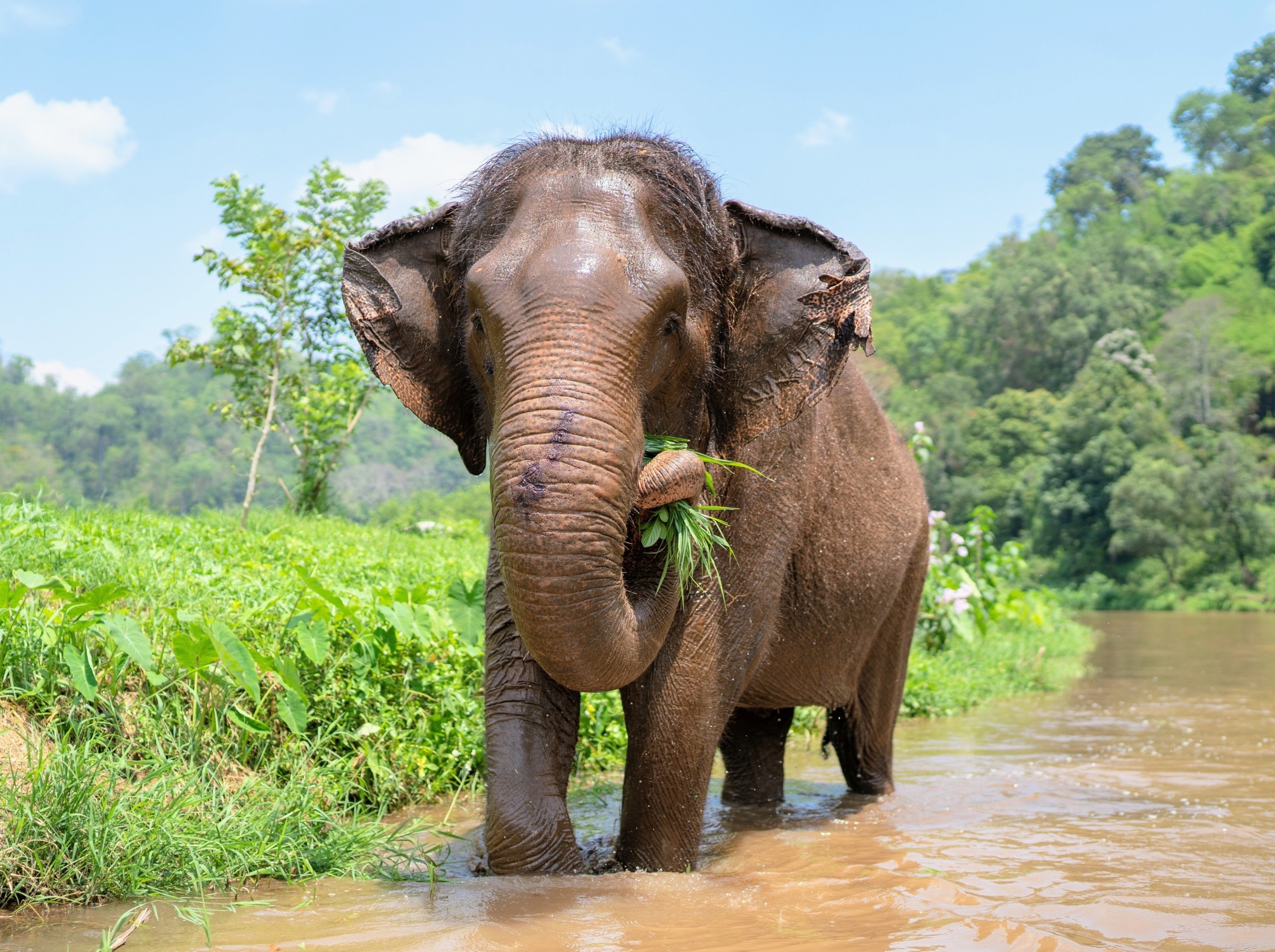
At first glance, crop raiding appears simple. Large animals search for easy food. Closer observation tells a different story. Many forest elephants ignore ripe fruit and focus on stems and leaves.
New research suggests a powerful reason behind such behavior. Crop fields may act as natural pharmacies for elephants dealing with illness.
Crops damaged for health
Farmers in Gabon noticed a strange pattern. Banana and papaya fruits often remain uneaten, while stalks and leaves suffer heavy damage. Such behavior deepens frustration.
“That makes farmers even angrier, because they can’t understand why they just damage the fruits and don’t eat them,” said Steeve Ngama, a conservation scientist at Gabon’s National Center for Scientific and Technological Research in Libreville.
Fruit offers high energy, while leaves provide far fewer calories. From a feeding perspective, fruit should attract hungry animals.
From a health perspective, leaves tell another story. Banana and papaya leaves contain chemicals known to fight parasites. Forest elephants may target plant parts that support recovery rather than hunger.
Forest elephants seek medicine
Ecological theory explains animal feeding choices as more than energy intake. Body condition, disease, and internal stress can shape food selection.
Many wild animals practice self-medication. Sick individuals seek plants that reduce pain, infection, or parasite load.
Forest elephants live long lives and roam wide areas. Parasites pose constant threats. Gut worms weaken digestion and energy use. Removing parasites improves survival.
According to ecophysiological theory, animals balance risk and reward. Entering farms brings danger from humans. Medicinal gain may justify such risk during illness.
Testing elephant health
To test this idea, Ngama worked with scientists from Gabon, Belgium, France, and the United States. Field research took place near Monts de Cristal National Park from 2016 to 2017.
The researchers followed elephant trails after nighttime farm visits. Fresh dung samples revealed parasite presence. Nearby plant remains showed feeding choices.
Banana, papaya, cassava, bamboo, ficus, costus, and palm plants were included in the analysis.
Parasites shape crop choice
Laboratory results showed strong patterns. Higher parasite levels matched higher use of banana and papaya plants.
Elephants with gut parasites showed increased interest in banana stems and leaves. Papaya plants attracted sick elephants even more strongly.
Energy content supports the medical explanation. Banana and papaya leaves contain fewer calories than fruits. Such plant parts hold compounds like flavonoids, terpenoids, papain, and benzyl isothiocyanate.
Scientific studies show these plants can suppress parasites in sheep and chickens, suggesting elephants may gain similar benefits.
Forest elephants avoid stress
Stress hormones offer another clue. Encounters with humans raise stress levels in many animals. Faecal glucocorticoid measurements showed no increase during crop visits.
Nighttime activity likely lowers risk. Elephants appear to plan visits carefully, balancing danger against health benefit.
Such behavior fits trade off theory. Animals accept short term danger to gain long term survival benefits. Crop fields become targeted stops rather than random feeding areas.
How forest elephants self-medicate
“I have no doubt elephants possess complex medicinal repertoires, and studies like this are an important step toward uncovering them,” said Elodie Freymann, a postdoctoral researcher at Brown University.
Ethnobiologist Jean Marc Dubost, affiliated with the Museum of Natural History in France, explained the learning process.
Sick animals can associate certain tastes with relief, storing those links in memory. In social species, that knowledge can be passed down through generations.
Traditional knowledge from Asian elephants
Similar behavior appears in Asia. In Laos and Thailand, domesticated wild elephants work in forests and farms. Caretakers known as mahouts observe health patterns closely.
“They say that the best way to cure a [sick] elephant is to release him into the forest, and he will find what he needs and recover within a few weeks,” said Dubost.
Certain roots and vines act as medicine, including Harrisonia perforata for diarrhea and Tinospora crispa for appetite loss.
Female elephants chew certain roots during pregnancy and nursing. Mahouts often adopt plant use learned from elephants.
Reducing conflict through science
Understanding medicinal crop raiding opens new solutions. Farmers often resort to violence when losses grow severe. Conservation efforts suffer as a result.
Providing alternative parasite treatments, such as mineral salts with medicinal properties, could reduce farm visits.
Better planning also helps. Keeping farms away from fruiting trees and wildlife corridors lowers attraction. Viewing elephants as knowledgeable animals rather than pests may change attitudes.
Learning from forest elephants
Beyond farming concerns, elephant medicine holds promise for human health. Observing animal plant use already helped scientists identify antimalarial compounds and natural repellents. Forest elephants may offer clues for future treatments.
Ngama hopes to study elephant responses to other diseases, including viruses dangerous to humans.
“Maybe, we can find out how elephants deal with Ebola and other outbreaks [that] humans, at the moment, are not able to deal with.”
Long recognized as seed dispersers and forest engineers, forest elephants may also be natural healers. They move quietly through forests and farms, guided by knowledge shaped by evolution and experience.
The study is published in the journal Ecological Solutions and Evidence.
—–
Like what you read? Subscribe to our newsletter for engaging articles, exclusive content, and the latest updates.
Check us out on EarthSnap, a free app brought to you by Eric Ralls and Earth.com.
—–
Rate this article
Login to rate this article
Comments
Please login to comment
No comments yet. Be the first to comment!