
Health & Fitness
15 min read
Flies Accelerate Cholera Spread During Oral Vaccine Trials
Medical Xpress
January 21, 2026•1 day ago
AI-Generated SummaryAuto-generated
Flies are identified as a significant, underestimated vector for cholera transmission in Africa, accelerating and complicating outbreaks beyond contaminated water or direct contact. Research indicates fly activity directly correlates with outbreak likelihood. Vaccination trials for an oral cholera vaccine, manufactured in South Africa, are underway. This aims to provide a rapid, localized response to control the disease's spread.
The role that flies play in spreading cholera—a bacterial disease that causes severe diarrhea and dehydration—has been underestimated in Africa, which carries the largest burden of the disease.
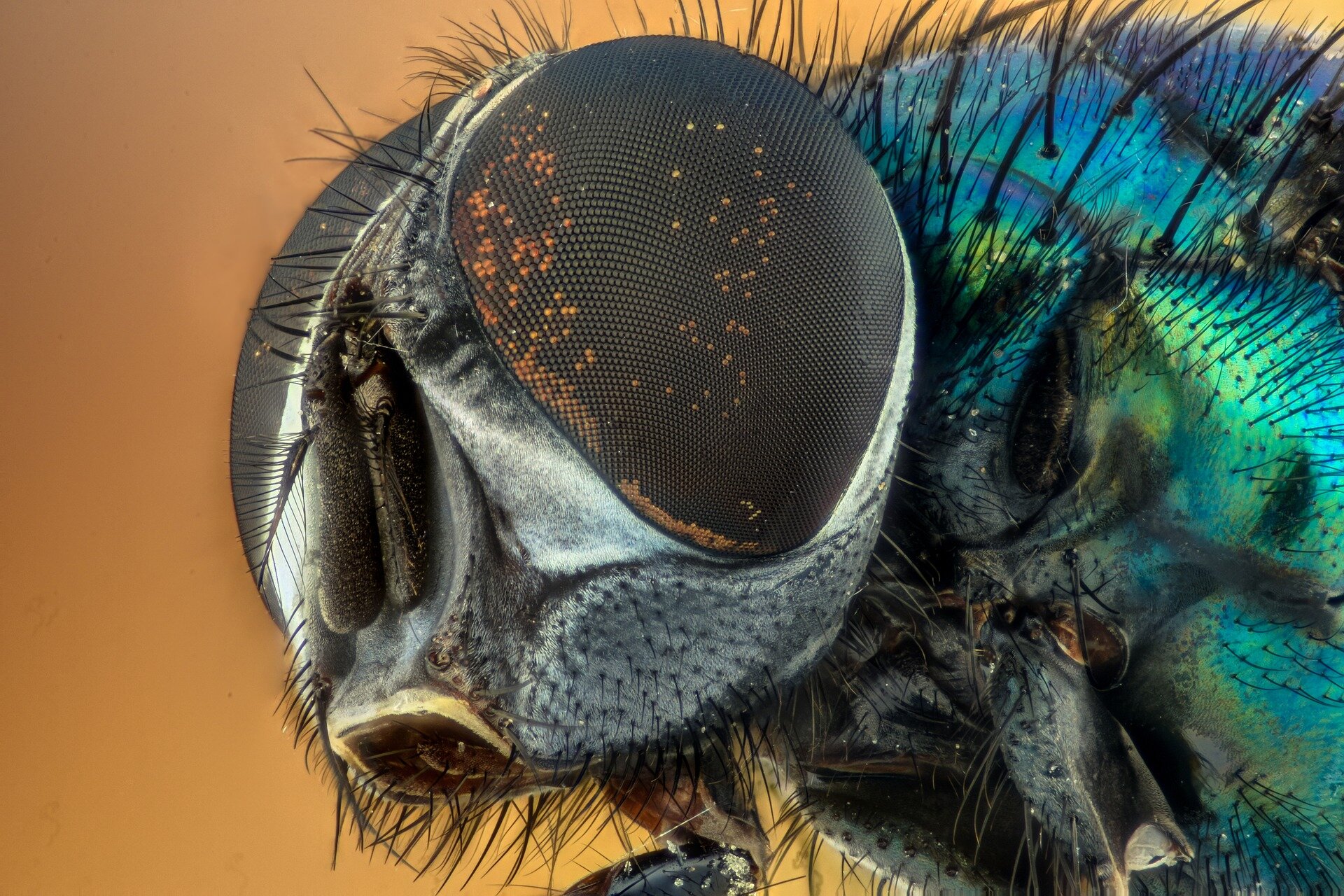
In a paper published in Mathematics, African biostatisticians show that cholera does not spread solely through contaminated water or direct contact with an infected person; flies can carry the pathogen, moving rapidly between contaminated environments and human food. This makes transmission faster and more unpredictable.
Scientists examined how often flies pick up bacteria from contaminated water, how readily they transmit bacteria to food, and how long flies survive in the environment.
"When these fly-related transmission factors were high, cholera outbreaks were more likely to take off. But when flies die quicker or don't pick up or transmit bacteria as efficiently, outbreaks were far more likely to fade out," explains Professor Romain Glèlè Kakaï, co-project investigator for the Sub-Saharan Africa Consortium for Advanced Biostatistics (SSACAB) at the Wits School of Public Health. Glèlè Kakai is also a professor at the University of Abomey-Calavi (Benin).
The Africa Centers for Disease Control and Prevention recorded 300,000 confirmed and suspected cases of cholera in 2025 across 20 countries, making it the worst outbreak in 25 years.
Additional modeling data revealed that flies are efficiently contaminated with bacteria. "The model suggests that cholera transmission can be highly explosive: even a small initial contamination may lead to a large outbreak when environmental vectors such as flies are active. Once contaminated, flies can mechanically transmit the bacteria to many individuals in a short time, producing outbreak dynamics that resemble sparks igniting dry grass," says Glèlè Kakaï.
Why cholera is becoming harder to control
Fragile water systems, poor sanitation, rapid urbanization and climate shocks that contaminate water sources and overwhelm health infrastructure all increase the complexity and unpredictability of cholera transmission.
"It is why robust data analysis, early warning systems and outbreak forecasting are essential in supporting rapid public-health decision making," notes Professor Tobias Chirwa, SSACAB's principal investigator and Head of the Wits School of Public Health.
Vaccines as a firebreak
Another study published in Infectious Disease Modelling confirms that to interrupt runaway transmission (where one infected person can infect more than three others), at least 70% of people in high-risk groups must be vaccinated. In less-exposed populations, approximately 62–65% coverage is required to halt transmission.
Alongside long-term investments in clean water, sanitation, climate resilience and community health systems, vaccination provides the fastest and most direct way to break chains of cholera transmission when outbreaks are already underway.
"Vaccination can have immediate and measurable effects on cholera transmission, reducing outbreak intensity in the short term, while improvements in water and sanitation act more gradually and contribute to longer-term control, " says Glèlè Kakaï.
A Wits University breakthrough
A Phase 1 safety clinical trial is now underway at Wits University for an oral cholera vaccine manufactured end-to-end in South Africa.
If successful, it will be the first time that Africa has produced its own cholera vaccine, rather than relying on imported supplies.
"Our modeling reveals that outbreaks move fast and unpredictably, and so response tools must be local, reliable and ready," says Chirwa.
How African data science changes the response
The growing capacity in bioinformatics and data science in Africa is allowing researchers to move beyond traditional descriptive epidemiology (counting and describing disease) towards more predictive, stratified and dynamic models of disease transmission.
This shift is driven by advances in computational methods and improved access to high-resolution epidemiological, climate and demographic data.
"Today, African biostatisticians can ask more nuanced questions, such as how vaccination affects different risk groups under seasonal conditions, and how environmental drivers intersect with social behavior," explains Glèlè Kakaï.
This contextual knowledge leads to more realistic model assumptions, better parameter interpretation, and more relevant scenario design. It also ensures that findings are communicated in ways that resonate with local decision-makers, increasing the likelihood that modeling results inform policy and intervention planning.
"Africa needs more than access to vaccines; it needs the scientific capacity to decide when, where and how to use them most effectively," says Chirwa. "By training African biostatisticians and data scientists, SSACAB is helping to ensure that outbreak response is guided by local expertise, local data and models that reflect African realities."
Rate this article
Login to rate this article
Comments
Please login to comment
No comments yet. Be the first to comment!