
Economy & Markets
22 min read
Proactive Fiscal Policy: The Engine for Fast & Sustainable Growth
vietnamnews.vn
January 20, 2026•2 days ago
AI-Generated SummaryAuto-generated
Vietnam's finance minister outlined a proactive fiscal policy to support fast, sustainable growth. Recent reforms strengthened fiscal foundations, with key targets met for 2021-25, maintaining low budget deficits and public debt. The policy prioritizes investment spending and aims to enhance revenue, expenditure management, and capital markets, attracting selective FDI.
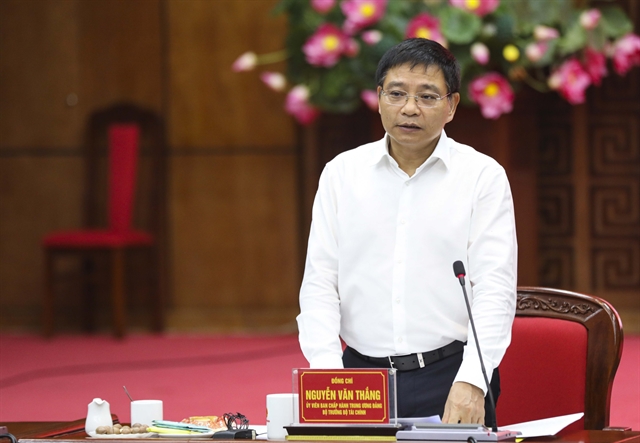
On the occasion of the 14th National Party Congress, Party Central Committee member and Minister of Finance Nguyễn Văn Thắng spoke with the press about the key orientations and priorities of the financial sector in the period ahead, outlining how recent reforms have strengthened fiscal foundations and how policy will be steered to support fast and sustainable growth.
How do you assess the implementation of financial and State budget tasks, as well as institutional and policy reforms in the fields of finance, investment and public finance in recent years?
The past five years have unfolded amid unprecedented and unpredictable global and domestic developments, posing significant challenges to fiscal management. Nevertheless, under the leadership of the Party, the National Assembly and the Government, and thanks to the concerted efforts of ministries, sectors and localities, the financial sector has delivered comprehensive and substantive results.
Overall, all key targets set for the 2021–25 period have been fulfilled. Financial and budgetary resources have been managed, mobilised and utilised more efficiently, making an important contribution to socio-economic development.
Fiscal policy has been proactively deployed to support growth while safeguarding macroeconomic stability. Over the 2021–25 period, the average State budget deficit was maintained at around 3.1–3.2 per cent of GDP, while public debt stood at an estimated 35–36 per cent of GDP, well within safe limits. These outcomes have helped reinforce Việt Nam’s national credit ratings.
At the same time, the legal framework governing public finance and the State budget has been substantially improved. During the period, the Ministry of Finance submitted 32 laws and resolutions to the National Assembly and its Standing Committee, alongside 168 decrees, and issued 436 circulars within its authority. These efforts focused on removing institutional bottlenecks, strengthening decentralisation and cutting administrative procedures to better meet development needs in a new phase.
On the revenue side, budget collection has become more sustainable, with the average mobilisation rate reaching about 18.3 per cent of GDP. Notably, despite this, the Government implemented tax and fee reductions, exemptions and deferrals amounting to roughly VNĐ1.1 quadrillion to support businesses and households through the pandemic and post-COVID recovery.
Expenditure management has also been tightened. Through enhanced revenue collection and spending discipline, around VNĐ1.5 quadrillion was saved and reallocated to priority areas such as development investment, national defence and security, science and technology, salary reform, social welfare, the elimination of substandard housing and school construction in border areas.
Investment spending has been increasingly prioritised, accounting for about 32 per cent of total State budget expenditure, with resources concentrated on major strategic infrastructure projects that generate strong spillover effects.
These fiscal foundations have supported a more dynamic investment environment. Việt Nam now has over one million active enterprises, up more than 46 per cent compared to 2020. Total social investment during 2021–25 reached around 32.2 per cent of GDP, with the private sector and State-owned enterprises contributing more than 65 per cent.
Việt Nam has also remained a bright spot for foreign direct investment, ranking among the world’s top 15 developing economies for FDI attraction, with foreign capital accounting for about 16 per cent of total social investment.
Capital markets have continued to develop in a safer, more sustainable and integrated manner. By the end of 2025, the bond market reached approximately VNĐ3.93 quadrillion, equivalent to 30.7 per cent of GDP, while stock market capitalisation approached VNĐ10 quadrillion, or nearly 78 per cent of GDP. Importantly, in 2025, Việt Nam’s stock market met all required criteria and was upgraded from frontier to emerging market status.
Beyond these achievements, the financial sector has actively supported regional development, emerging industries and new economic models, contributed to the planning of an international financial centre and free trade zones, and worked closely with other sectors to ensure growth goes hand in hand with social progress and equity.
What key tasks and solutions will the financial sector focus on to stabilise the macroeconomy and promote fast, sustainable growth in the upcoming time?
In the coming period, facing new requirements and higher expectations, the financial sector will continue to implement a proactive fiscal policy that is reasonably expansionary, but clearly focused and targeted. We will strengthen the leading role of the central budget while promoting the initiative and creativity of ministries, sectors and local authorities.
Close and effective coordination with monetary policy will remain a priority to preserve macroeconomic stability, support the goal of double-digit growth and facilitate the transformation of the growth model.
We will further enhance the efficiency of State budget revenue and expenditure management, ensuring accurate, sufficient and timely collection while nurturing sustainable revenue sources. For the 2026–30 period, we aim to maintain an average budget mobilisation rate of around 18 per cent of GDP, raise development investment spending to about 40 per cent of total budget expenditure and tightly control budget deficits and public debt in line with the economy’s repayment capacity. These efforts will also contribute to improving Việt Nam’s national credit standing.
Could you elaborate on major orientations for market development, enterprise growth and investment attraction in the next stage?
The financial sector will continue to refine institutions and the legal framework for public finance and the State budget, while accelerating digital transformation and administrative reform to enhance management and supervisory effectiveness.
We will improve the performance of the State-owned sector so that it truly plays a pioneering and leading role in key, essential and strategic industries. At the same time, strong emphasis will be placed on developing the private sector in line with Resolution No.68-NQ/TW. By 2030, Việt Nam aims to have around two million operating enterprises, with technological capacity, innovation and digital transformation ranking among the leading groups in ASEAN and Asia.
Capital markets, particularly the stock market, will be further developed as a crucial channel for medium- and long-term financing. We will make effective use of opportunities arising from the stock market upgrade and continue to complete the legal framework for emerging trends such as digital assets, green transition and digital transformation.
FDI attraction will be more selective, prioritising large-scale, high-tech and environmentally friendly projects. At the same time, we will strengthen linkages between domestic enterprises and foreign-invested firms to enable deeper participation in global value and supply chains. — VNS
Rate this article
Login to rate this article
Comments
Please login to comment
No comments yet. Be the first to comment!