
Breaking News
15 min read
European Lawmakers See Strong Positive Ties with Israel, Survey Reveals
The Jerusalem Post
January 20, 2026•2 days ago
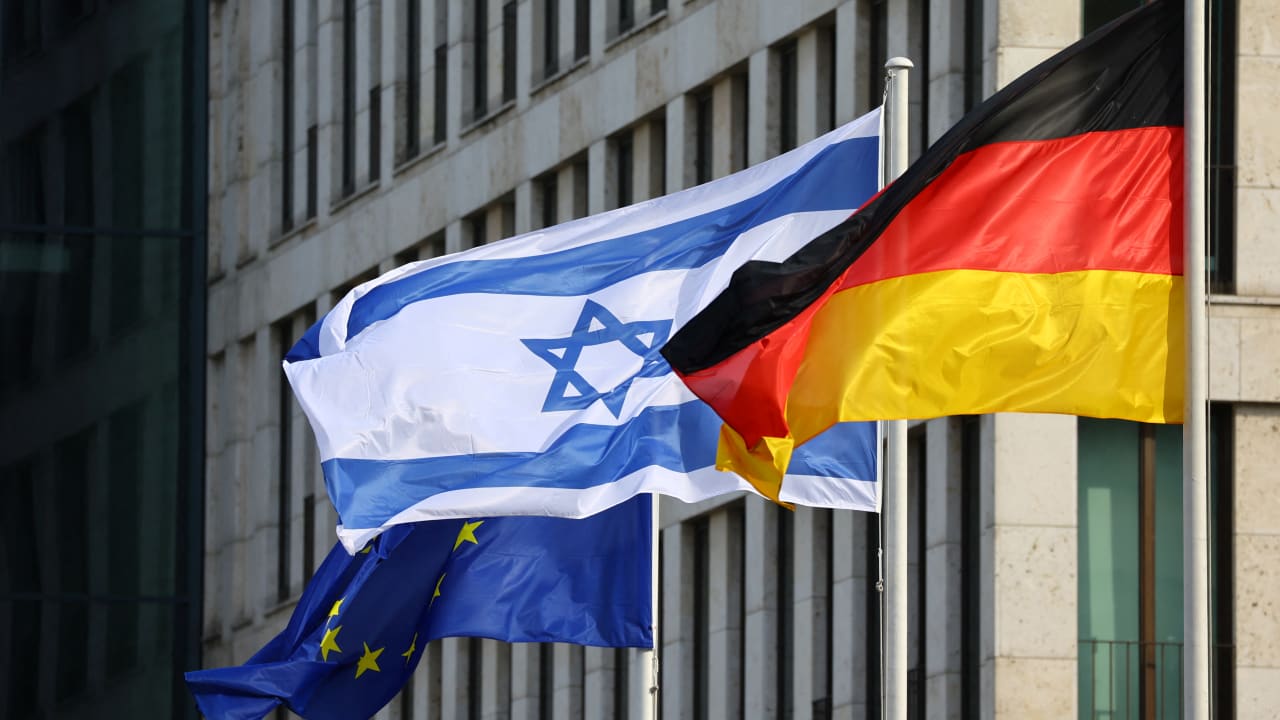
AI-Generated SummaryAuto-generated
A survey reveals 70% of European MPs view their country's relations with Israel positively, with this perception remaining stable. MPs cite historic responsibility, security, and shared values as key factors. A majority also support increased cooperation with Israel, particularly in defense and security. Additionally, most MPs believe their countries should promote Arab-Israeli normalization and support reforming or replacing UNRWA.
A strong majority of 70% of European MPs perceive their country’s relations with Israel as very good or rather good, according to a new survey by European Leadership Network (ELNET).
To assess European lawmakers’ views, ELNET surveyed 1,061 Members of Parliament from 35 countries between 2022 and 2025.
Surprisingly, across all waves of the survey, a clear majority of European MPs rated the relations with Israel as good, varying from 54 percent to 86 percent over the years.
The number of respondents who rated the relations as "very good" was not significantly lower in 2025 than in 2022, before the war. Additionally, only 7% of respondents in 2025 said the relations were very poor, an increase of just 3% from both 2023 and 2024.
MPs from Romania (96%), Italy (87%), and Germany (83%) reported particularly favorable views of their countries’ relations with Israel. In contrast, markedly smaller shares of MPs from Ireland (9 percent), Spain (20 percent), and Turkey (18%) described relations as positive.
It is important to note that MPs who visited Israel were more likely to view relations positively, with 76% assessing the situation as favorable, compared to 65% among MPs who did not visit.
European MPs see historic responsability over Israel
In 2024 and 2025, MPs cited historic responsibility, security relevance, and shared values as equally important factors in their country's relationship with Israel. Political importance and economic relevance were given slightly less weight in the relationship with Israel.
The focus on historic responsibility was highest in Germany, Austria, and the Czech Republic, but notably low in Spain and Turkey. However, the focus on historic responsibility has declined significantly in Germany, from 96% in 2023 to 66% in 2025. Greece placed the highest weight on security interests and economic cooperation.
Potential for cooperation
Of the respondents, 68% recommended more cooperation with Israel in 2025, and 21% believed the level of cooperation should stay the same.
Only 3% believed there should be no cooperation, and only 7% believed there should be less. Support for strengthening cooperation was particularly high among Liberal MPs (87%) and Conservative MPs (80%), while left-wing MPs showed a more divided profile, with around 53% favoring stronger cooperation and around 14% supporting a reduction.
A key point is that these patterns remain highly stable across all survey years, including before and after major geopolitical shocks, indicating that European positions on cooperation with Israel are shaped by long-term strategic alignments rather than short-term events.
Breaking cooperation down into subcategories, defense and homeland security cooperation was cited as the strongest overall priority. In fact, support for this intensified after 2022, with defense rising from 24% in 2022 to 57% in 2025.
This preference was especially pronounced among Conservative and Liberal MPs, and among MPs from the Czech Republic, Greece, France, Denmark, and Spain. Sweden, on the other hand, placed high importance on cooperation in science and education, as did Austria and Romania.
Regional involvement
A sizable 81% of European MPs across all survey waves support their country promoting further Arab–Israeli normalization, with consistently high backing across party families and particularly strong endorsement in Italy, Norway, Austria, Czechia, Greece, and Germany, while lower support is registered in Finland, Denmark, and Ireland.
As of 2025, a majority of MPs believed that the reconstruction of Gaza should be led jointly by Arab countries and Israel. A majority also stated that Arab countries should take a greater diplomatic role in the peace between Israelis and Palestinians.
Across the 2024 and 2025 waves, European MPs overwhelmingly agree that the status quo of UNRWA is not sustainable. 90 to 94% support either reforming the agency with stronger oversight or transferring its responsibilities to other organizations through an orderly dissolution.
68% of MPs believe that their own country should suspend all UNRWA payments until a long-term reform or replacement framework is in place.
A resounding 92% of MPs believe the IRGC should be designated a terror organization, reflecting a wider threat assessment among European MPs that Iran is the second biggest threat to European security after Russia.
Antisemitism
Regarding antisemitism, concern for Islamist antisemitism has increased, as it is the most frequently cited threat. Left-wing antisemitism also rose, whereas concerns regarding right-wing antisemitism stayed relatively stable.
Israel-related antisemitism was identified as a serious concern by 35 to 45% of MPs in Northern and Western Europe and 20 to 30% in Central and Southern Europe.
Rate this article
Login to rate this article
Comments
Please login to comment
No comments yet. Be the first to comment!