
Technology
31 min read
10 European Hot Hatches That Could Have Revolutionized the US Market
CarBuzz
January 19, 2026•3 days ago
AI-Generated SummaryAuto-generated
This article highlights ten European hot hatchbacks that never officially arrived in America. These performance-oriented vehicles, including iconic models like the Lancia Delta HF Integrale Evoluzione and Renault Clio RS 182 Trophy, could have significantly impacted the US automotive market by introducing greater competition and enhancing the hot hatch segment.
Can you imagine what it would've been like to be able to go to a Nissan dealership in the '90s and buy a Nissan Skyline R34 GT-R off the showroom floor instead of having to wait 25 years to own one? How would that have changed automotive culture in the States?
We can only imagine. What about hot hatches? Typically, these aren't as beloved as they are elsewhere in the world, but we still have access to a handful of great hot hatches available in 2025. There were a few European hot hatches from the same era as the R34 GT-R that we never got in the US, but had they been brought over and sold here, they could have changed everything.
This article focuses on iconic and noteworthy hot hatches from European manufacturers that were either not sold in America or were excluded from the North American market, which could have given established automakers a run for their money and resulted in greater competition. The cars on this list are arranged alphabetically by manufacturer.
Audi S1
Potential Rivals: Mini Cooper John Cooper Works
The Volkswagen Golf GTI is no stranger to the US, remembered mostly as the go-to choice for any boy-racer and as the more affordable alternative to the mighty Golf R. However, some might not be familiar with the cousin of the Volkswagen Mk7 Golf GTi, the Audi S1. Similar to the relationship between the Audi A3 and Audi RS3, the S1 was the performance-focused offshoot of the first-generation Audi A1 hatchback.
It relied on the same EA-888 inline turbocharged four-cylinder engine, paired with a six-speed manual transmission, partly because there was insufficient space to accommodate Audi's dual-clutch transmission. Although smaller and less intimidating than the Mk7 Golf GTi, the Audi S1 was still more visually imposing than the model it was based on, the subcompact hatchback segment, which had the potential to rival the athletic Mini Cooper John Cooper Works hot hatch.
BMW M140i
Potential Rivals: VW Golf R, Audi RS3, Ford Focus RS
The BMW M140i ranks high on the list of hot hatches that we wish were sold in the US. It was an M-bred performance hatchback that employed the beloved B58 inline-six cylinder engine, which we've likened to the modern 2JZ. In this athletic hatchback, the engine produced 340 horsepower and 369 lb-ft, which was enough to move its 3,560-pound body to 60 mph in less than 4.4 seconds.
It was quicker than the Mk7 Golf R, which sent all its power to all four corners rather than exclusively to the rear axle, as in the BMW M140i. Beyond its straight-line acceleration, the M140i's chassis dynamics, RWD configuration, and performance made it an exciting hot hatch that excelled in the markets where it was sold. Beyond that, there really was nothing like it in BMW's catalog while it was being produced elsewhere in the world.
Citroën AX GTi
Potential Rivals: Golf Mk1 GTi, Honda Civic CR-X Si
We can't blame you if you've never heard of this hot hatch. The Citroën AX GTi was a French hatchback from the early 1990s that was the most athletic version of Citroen's peppy hatchback, offering more power than any other iteration of the bite-sized hatchback and capable of scampering to a top speed of 119 mph.
In the States, the Citroën would have been a direct competitor to the Honda Civic CR-X Si, and in markets where it was available, it was an affordable hatchback with a bare-bones interior but enough grunt to make its overall driving experience fun. Although 100 horsepower was nothing to gawk over, the Citroën AX GTi weighed only 1,786 pounds.
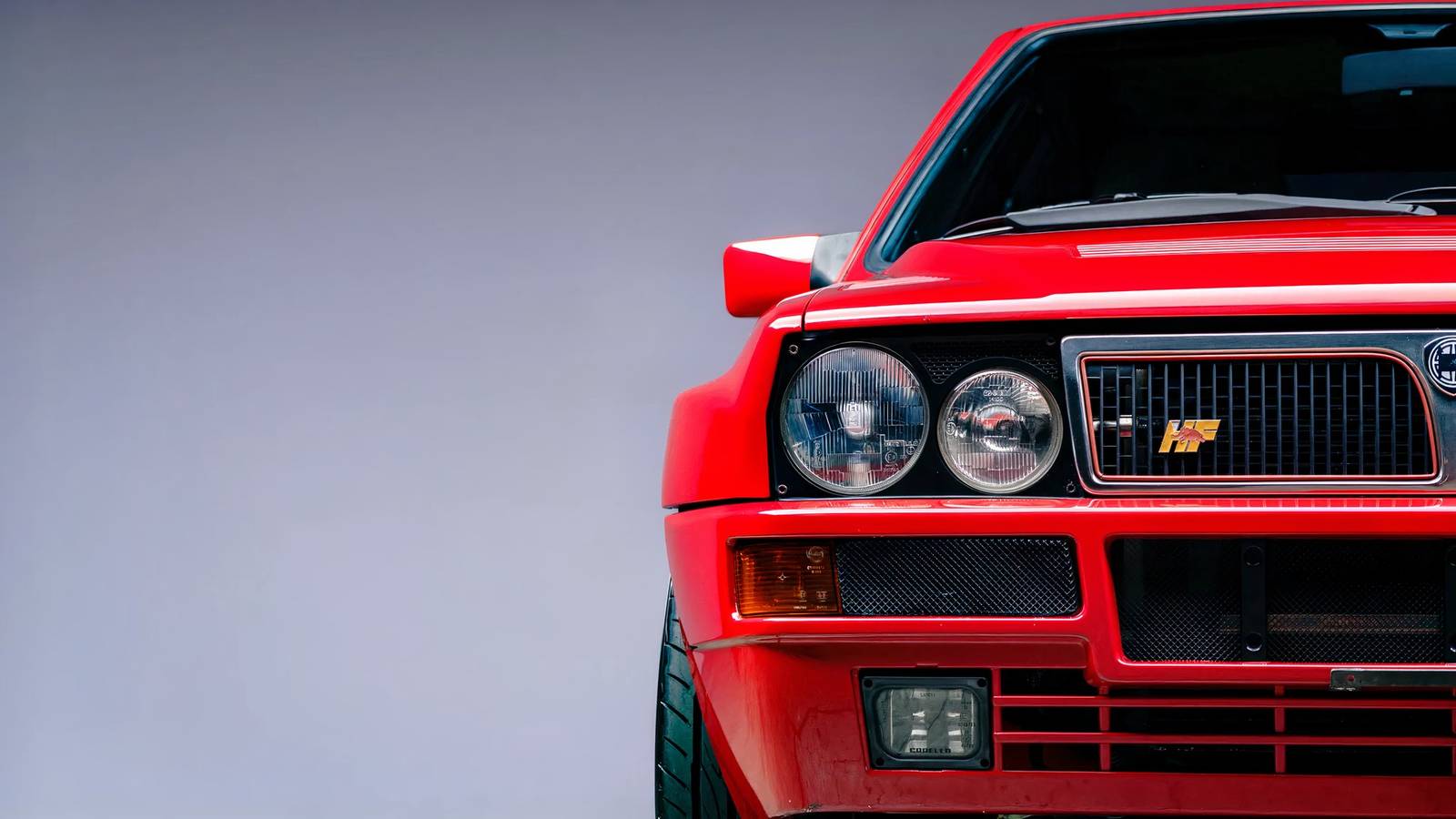
Lancia Delta HF Integrale Evoluzione
Potential Rivals: Audi Ur-Quattro
The Lancia Delta HF Integrale Evoluzione needs very little introduction, considering it is one of the most iconic cars of the 20th century. Bred to appease its manufacturer's desire to compete in motorsport, the boxy Lancia Delta HF Integrale Evo debuted at the start of the 1990s and is revered as the pinnacle of the road-going variants of the mighty Italian hatchback.
This iteration of the Lancia Delta featured a new engine management system and fuel injection system, while elsewhere it employed an improved suspension, a beefier steering rack, an improved braking system, and a new exhaust, among other changes. Had it been sold in the US, the Landica Delta HF Integrale Evoluzione would've competed with the best and boldest, including the Toyota Celica GT-Four, Subaru Impreza WRX, and BMW E30 M3, but that's wishful thinking, considering Lancia pulled out of the US in the early 1980s.
Opel Kadett GSI 16V
Potential Rivals: VW Golf GTi, Peugeot 205 GTi
The fervor for hot hatches began to pick up during the 1980s, and in 1984, Opel introduced the sixth generation of the Kadett. It was in this generation that we saw the introduction of the Opel Kadett GSi 16V, which earned a reputation as a giant-killer, boasting an engine that delivered more hp per liter than any other mainstream production car. That record would only be broken by the Ferrari F355, which debuted in the mid-1990s.
At the core of the Opel Kadett GSi 16V was the C20XE inline-four engine that produced 150 horsepower, an impressive feat considering that, around the time, most production boosted four-cylinder engines barely managed more than 130 hp. It wasn't the most potent Opel Kadett at the time, though, with South having an exclusive offshoot that was faster, more powerful, and therefore even more desirable.
Renault Clio RS 182 Trophy
Potential Rivals: VW Golf GTi
The Renault Clio 182 was a high-performance variant of Renault's otherwise mundane hatchback, debuting in the early 2000s. In its earliest form, it was an analogue hot hatch with a 2.0-liter turbocharged four-cylinder engine at its core. By 2005, the Renault Clio 182 had reached its end, with the pallbearer of this generation being the Renault Clio 182 Trophy. None of Renault's high-performance Clio models were offered in the US, but this was one of the most desirable models from the early 2000s.
Like its predecessors, a 2.0-liter naturally aspirated four-banger powered the front axle and was paired with a five-speed manual transmission. Compared to previous models, this iteration gained new suspension dampers, stiffer spring rates, a wider track, and rode 10mm lower than the standard Renault Clio. Only 500 examples were ever built, and today, it's remembered as one of the greatest hot hatches ever created, which makes the fact that it never touched down in the US sting a little more.
Renault Mégane R.26.R
Potential Rivals: Honda Civic FN2 Type R, Ford Focus Mk2 RS
Since its introduction in 2004, the Renault Mégane R.S. has been at the forefront of the French automaker's performance lineup, but few were as extreme and as obsessed with performance as the Renault Megane R26.R. This was essentially a no-nonsense variation of the first-generation Renault Mégane R.S. that ditched nearly all of its creature comforts (well, whatever creature comforts the standard R.S model had to offer, which wasn't much to begin with) along with other aspects like:
Rear seats
Airbags
Climate control
Rear wipers
Foglamps
Soundproofing
It was a race-ready hot hatch, featuring six-point harnesses, roll-cage mounting brackets, carbon-fiber seats, and a lightweight titanium chassis. In 2008, this version of the first-gen Renault Mégane R.S. held the lap record at the Nürburgring in its class.
Seat Leon Cupra 4
Potential Rivals: VW Golf Mk4 GTi
There are many automotive manufacturers under the Volkswagen umbrella, and it is very common for some of them to borrow parts from Volkswagen for their vehicles. Seat, a Spanish automotive manufacturer, is one of those manufacturers. In the late 1990s, Seat debuted the Seat Leon, a bulbous hatchback based on the VW Group's A4 platform and borrowing several elements from the Volkswagen Mk4 Golf.
However, while borrowing parts from that Golf generation, the Seat Leon was sportier and more affordable. An interesting offshoot of this first generation was the Seat Leon Cupra 4, which didn't rely on a four-cylinder engine like its stablemates but instead borrowed Volkswagen's VR6 engine and VW's Haldex Traction system, which delivered power to all four corners. It offered just over 200 horsepower. Production was extremely limited, lasting only two years, and was only offered in left-hand drive.
Talbot Sunbeam Lotus
Potential Rivals: VW Golf GTi
The Talbot Sunbeam Lotus, also known as the Lotus Sunbeam, is one of the most iconic British hot hatches from an era before we started calling performance-focused hatchbacks "hot hatches". It was the result of an unlikely collaboration between Chrysler and Lotus, aimed at creating a hatchback for the harrowing Group B rally category. The road-going version's production began in 1979 and lasted only until the following year, when the Series 2 rendition debuted.
Both versions relied on a petite four-cylinder engine that produced 150–153 horsepower. Although it didn't deliver heart-stopping power output, that petite engine was housed in a lightweight frame, which improved the steering feel and the driving experience. Had it been offered in the US, it would have been one of the earliest examples of a hot hatch in America, with the potential to sway the automotive culture at the time.
Volkswagen Golf GTi MK1
Potential Rivals: Honda Civic CR-X Si
"But we did get the first-generation Mk1 in the US", well, yes, but not really. Arguably, one of Volkswagen's most iconic models, the first-generation Volkswagen Golf GTI Mk1, debuted in 1975 in the US, but it wasn't the same GTI offered in Europe; it was also sold under a different name: the Volkswagen Rabbit. In its earliest years, the VW Rabbit was built at the Westmoreland production plant, but many of its parts were cheaper, such as its suspension and interior components.
Beyond those cheaper parts, the VW Rabbit also employed a detuned four-cylinder engine that mustered only 74 horsepower, but later iterations would command 90 horsepower. Although it arrived years after the Mk1 GTi debuted in Europe, it helped establish the hot hatch image in the US.
Rate this article
Login to rate this article
Comments
Please login to comment
No comments yet. Be the first to comment!