
Geopolitics
18 min read
European Countries Rethink Participation in US-Led Gaza Coordination Center
The Times of Israel
January 20, 2026•2 days ago
AI-Generated SummaryAuto-generated
Several European nations are reconsidering their participation in a US-led Gaza coordination center. Diplomats cite the center's failure to increase aid to Gaza or achieve political change. Some countries have not returned personnel since the holidays and question the center's direction and purpose. This reassessment reflects growing unease among allies regarding US foreign policy.
Several European countries are considering whether to stop sending personnel to a US military-led coordination center for Gaza, saying it has failed to increase aid flows to the war-shattered enclave or achieve political change, diplomats said.
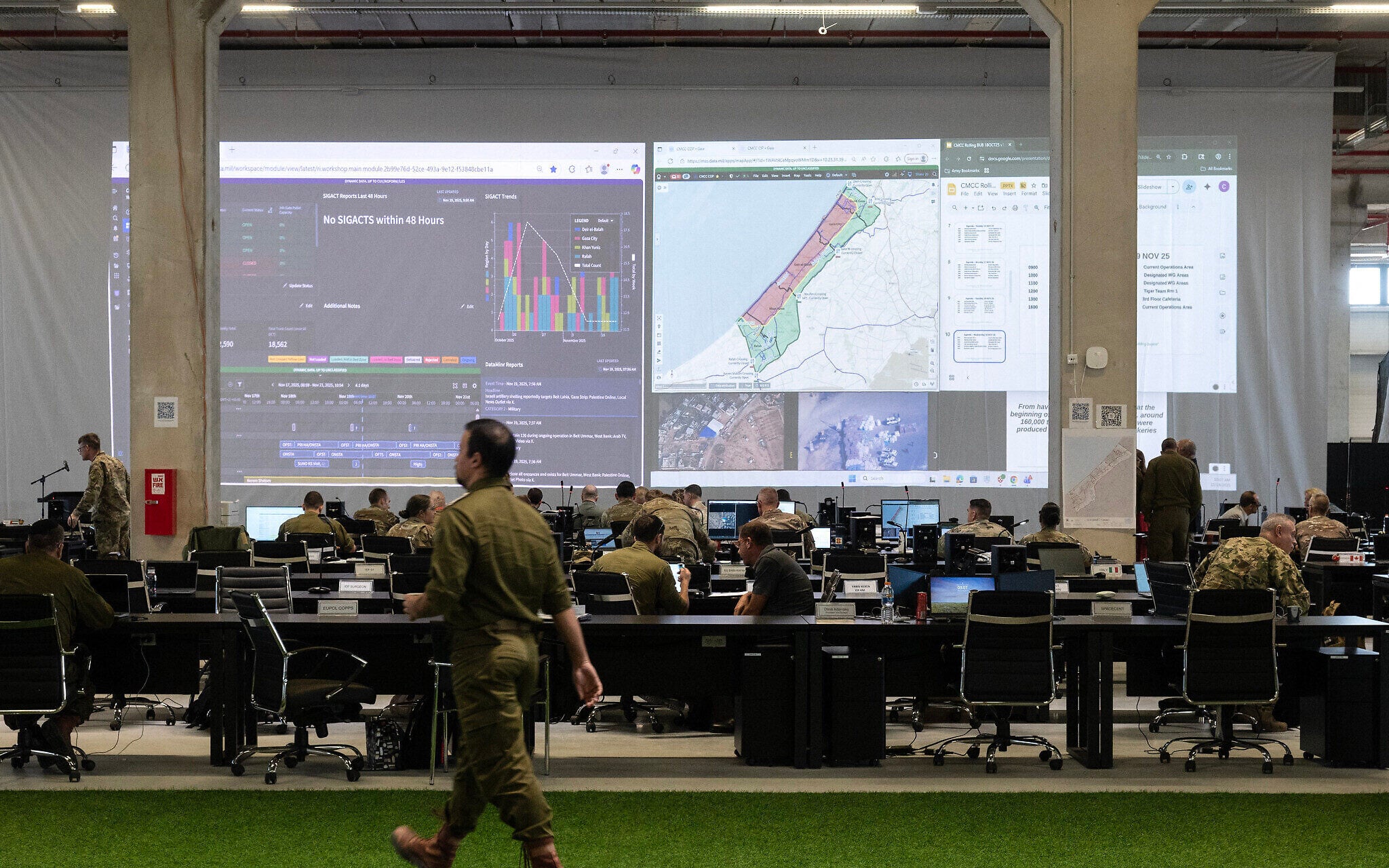
The Civil-Military Coordination Center was established in southern Israel in October under US President Donald Trump’s plan to end the war in Gaza. It was tasked with monitoring the Israel-Hamas ceasefire, facilitating the entry of aid, and developing postwar policies for the Palestinian territory.
Dozens of countries, including Germany, France, Britain, Egypt, and the United Arab Emirates, sent personnel, including military planners and intelligence officials, to the center as they sought to influence discussions on Gaza’s future.
But eight foreign diplomats told Reuters that officials from some European countries had not returned to the CMCC, located in Kiryat Gat some 20 miles (36 kilometers) from the Gaza border, since the Christmas and New Year holidays. Several nations were questioning the purpose of the center, with one Western diplomat describing it as “directionless.”
“Everybody thinks it’s a disaster, but there is no alternative,” said another Western diplomat.
The European rethink, which has not been previously reported, is the latest sign of unease among Washington’s allies as Trump pursues unorthodox foreign policies toward Gaza, Greenland, and Venezuela.
Some European governments were now considering whether to reduce their CMCC presence or even to stop sending personnel altogether, the diplomats said. The diplomats declined to say which governments were reassessing their position.
The White House and US State Department did not respond to requests for comment on this story.
‘Board of Peace’
The CMCC is run by a US general and also hosts both American and Israeli military personnel. Its establishment was a key element of the first phase of Trump’s ceasefire plan, which has been tested by alleged repeated Hamas violations of the agreement, including attempts to approach troops stationed on the Israeli-controlled side of the Yellow Line in Gaza, and Israeli airstrikes in response.
As Trump pursues the next phase of his plan, including setting up a “Board of Peace” to supervise Gaza policy, it is unclear whether the CMCC will retain any influence over policy formation or aid distribution.
The diplomats said it was also not known how the CMCC would work with the Board of Peace’s Gaza-focused bodies, including its committee of Palestinian technocrats.
Washington last week announced Trump’s plan had moved to its second phase, which would include demilitarization and reconstruction. But there was no mention of further Israeli military withdrawals, beyond a partial pullback in October that has left 53 percent of Gaza still in Israeli hands.
In November, Reuters reported that US partners were concerned that Gaza could be effectively partitioned as efforts to advance Trump’s plan beyond the ceasefire stalled.
There was also no mention in Trump’s second phase announcement of the expected deployment of a multinational stabilization force into the enclave.
Gaza’s Rafah Border Crossing with Egypt has yet to reopen, although this was supposed to have happened during the plan’s first phase that took effect in October.
Israel has argued that it shouldn’t reopen Rafah in both directions before Hamas agrees to disarm and return the body of the final Israeli hostage, Master Sgt. Ran Gvili, which it was meant to do in the first phase.
The diplomats said there had been no significant increase in humanitarian aid entering Gaza since the truce took hold, contradicting White House assertions, despite widespread homelessness and malnutrition.
Many trucks entering Gaza were in fact carrying commercial goods, they said, and Israel remained effectively in control of Gaza’s aid policy, despite the US-led CMCC being tasked with helping boost relief supplies into the enclave.
Israel bans or restricts supplies from entering Gaza on the grounds that they are “dual-use,” or could be repurposed for military as well as humanitarian purposes. The diplomats said Israel has so far made no concessions on dual-use items, which include metal poles for tents to house the largely displaced population.
Israel defends policy on access to Gaza
An official at COGAT, the Israeli government agency that coordinates civilian policy in Gaza, said that 45% of all trucks that have entered Gaza since the October ceasefire were commercial vehicles transporting food and other everyday goods.
The official said humanitarian trucks were prioritized and that commercial shipments supplemented the aid effort. If additional humanitarian trucks were available, they would be allowed to enter Gaza, the official said.
The COGAT official acknowledged that Israel continues to restrict dual-use items, but said alternatives are being sourced, such as tent poles made of wood.
Beyond humanitarian aid, the eight diplomats said, CMCC personnel had drafted a number of “white papers” on Gaza on a range of topics, including reconstruction and governance, but it was unclear if they would be implemented.
It is unlikely that countries would formally leave the CMCC, in part out of fear of drawing Trump’s ire but also out of a desire to be able to ramp up their involvement in the center if it gains relevance, the diplomats said.
There is also a concern that quitting the CMCC could give Israel greater influence over policies for postwar Gaza, they said. There are no Palestinians at the CMCC, and a European presence could help put more emphasis on Palestinian interests.
Trump’s 20-point peace plan provides no timeline or mechanism for implementation, and since the ceasefire started in October, more than 460 Palestinians have been killed in fighting, though the toll cannot be verified and does not differentiate between civilians and fighters.
Three IDF soldiers have been killed during the same period.
Rate this article
Login to rate this article
Comments
Please login to comment
No comments yet. Be the first to comment!