
Technology
5 min read
Espressif Unveils ESP32-E22: A Powerful Wi-Fi 6E & Bluetooth Co-Processor
Hackaday
January 21, 2026•1 day ago
AI-Generated SummaryAuto-generated
Espressif has launched the ESP32-E22, a Radio Co-Processor chip offering Wi-Fi 6E and Bluetooth 5.4 capabilities. It features dual RISC-V CPU cores and supports PCIe or SDIO interfaces for integration with other systems. This advanced chip provides full Wi-Fi 6E functionality across all bands and includes Bluetooth Classic and BLE support. Engineering samples are currently available, with a public release anticipated later.
Espressif has unveiled its latest major chip in the form of the ESP32-E22. Officially referred to as a Radio Co-Processor (RCP), it’s intended to be used via its PCIe 2.1 or SDIO 3.0 host interface to provide wireless communications to an SoC or similar.
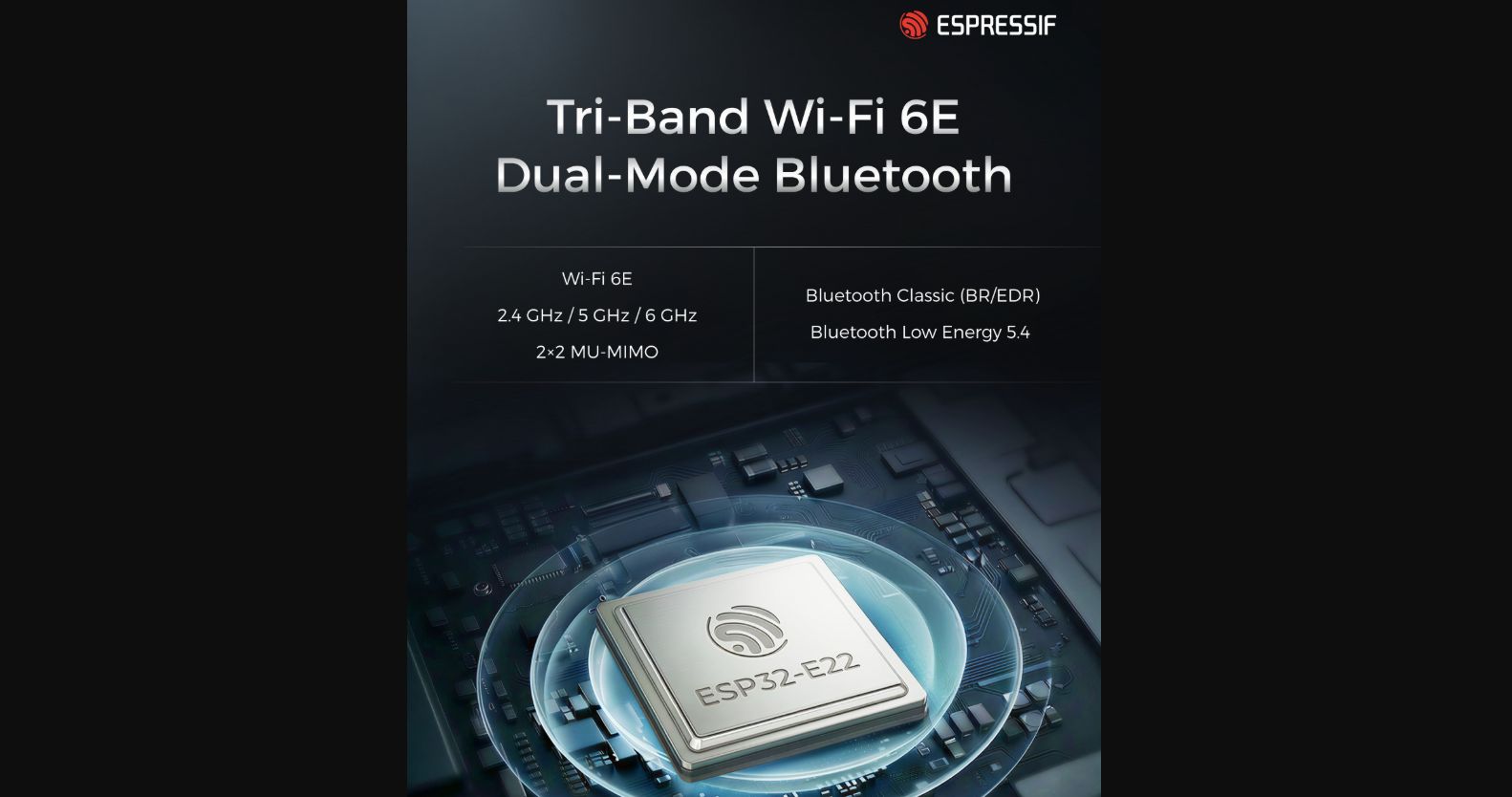
This wireless functionality includes full WiFi 6E functionality across all three bands, 160 MHz channel bandwidth and 2×2 MU-MIMO, making it quite a leap from the basic WiFi provided by e.g. the ESP32-S* and -C* series. There is also Bluetooth Classic and BLE 5.4 support, which is a relief for those who were missing Bluetooth Classic in all but the original ESP32 for e.g. A2DP sinks and sources.
The ESP32-E22 processing grunt is provided by two proprietary Espressif RISC-V CPU cores that can run at 500 MHz. At this point no details appear to be available about whether a low-power core is also present, nor any additional peripherals. Since the graphics on the Espressif PR article appear to be generic, machine-generated images – that switch the chip’s appearance from a BGA to an LQFP package at random – there’s little more that we can gather from there either.
Currently Espressif is making engineering samples available to interested parties after presumed vetting, which would indicate that any kind of public release will still be a while off. Whether this chip would make for an interesting stand-alone MCU or SoC along the lines of the -S3 or -P4 will remain a bit of a mystery for a bit longer.
Thanks to [Rogan] for the tip.
Rate this article
Login to rate this article
Comments
Please login to comment
No comments yet. Be the first to comment!