
Space & Astronomy
9 min read
Indian Biologist Unlocks Cell Secrets with DNA Nanotechnology
India Today
January 20, 2026•2 days ago
AI-Generated SummaryAuto-generated
Indian biologist Yamuna Krishnan has developed DNA nanodevices capable of operating inside human cells. These ultra-small devices illuminate internal cellular processes, particularly within the challenging lysosome environment. This breakthrough offers potential for earlier diagnosis of neurodegenerative diseases like Alzheimer's and Parkinson's, enabling timely intervention and improved patient outcomes.
Some of the biggest unanswered questions in biology lie far beyond the reach of the naked eye, buried deep inside the cell. While modern medicine has made remarkable progress in understanding organs and tissues, scientists still know surprisingly little about what happens inside the tiny compartments, called organelles, that keep each cell alive.
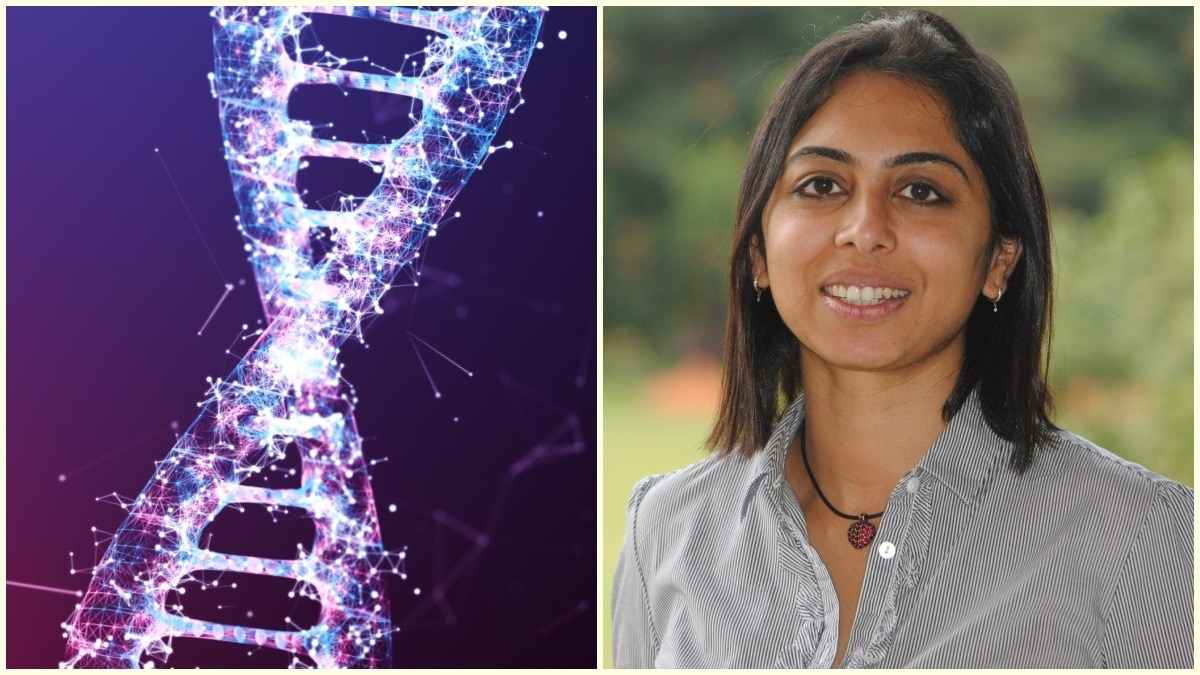
Now, a pioneering approach using DNA-based nanotechnology is helping researchers peer into this invisible world. At the center of this effort is Yamuna Krishnan, the Louis Block Professor of Chemistry at the University of Chicago.
In work published in Nature Chemical Biology, Krishnan describes how her lab has developed ultra-small DNA nanodevices that can function inside living cells, illuminating biological processes that have long remained out of reach.
“We are only scratching the surface of biology,” Krishnan said, pointing out that most existing drugs target proteins on the cell’s outer membrane. That surface accounts for just 2–5% of the total membrane system. The vast remainder belongs to internal organelles, structures whose roles are still poorly understood.
One of the most challenging organelles to study is the lysosome, a highly acidic compartment responsible for breaking down waste and recycling cellular material. Lysosomal dysfunction has been linked to neurodegenerative disorders such as Alzheimer’s and Parkinson’s diseases, yet its extreme chemical environment disrupts most conventional sensing technologies.
Krishnan’s solution is deceptively simple: nanodevices built from DNA, the fundamental molecule of life. Her team has engineered tiny DNA duplexes, weighing just about 35 kilodaltons, made from three to four DNA strands.
Each strand carries a specific function, allowing the device to survive the harsh lysosomal environment and report on chemical imbalances within it.
The implications for medicine could be significant. Neurodegenerative diseases are notoriously difficult to diagnose early, often requiring invasive tests or imaging that exposes patients to radiation. Many people live with Parkinson’s disease for years before receiving a confirmed diagnosis.
DNA-based nanodevice assays, which require only a small number of cells, could help detect disease-related changes far earlier, giving doctors valuable time to slow or potentially reverse damage.
Krishnan’s work bridges chemistry, biology, and medicine. After earning her PhD at the Indian Institute of Science and conducting postdoctoral research at Cambridge University during the rise of next-generation DNA sequencing, she joined the University of Chicago in 2014.
There, she also founded Esya Labs, a biotech startup translating her laboratory discoveries into diagnostic tools, supported by grants from the Michael J. Fox Foundation and the Gates Foundation.
“DNA is a very ancient language,” Krishnan said. Today, that language is being used to decode the deepest mysteries of the cell—one nanodevice at a time.
- Ends
Rate this article
Login to rate this article
Comments
Please login to comment
No comments yet. Be the first to comment!