
Health & Fitness
12 min read
Davos 2026: World Ill-Prepared for Future Pandemics, Warns WEF Expert
Moneycontrol
January 18, 2026•4 days ago
AI-Generated SummaryAuto-generated
Global health systems are inadequately prepared for future pandemics, warned the World Economic Forum's Shyam Bishen at Davos. Climate change, conflicts, and supply chain disruptions increase outbreak risks. Bishen highlighted fragmented global coordination, surveillance gaps, and concentrated vaccine manufacturing as critical vulnerabilities. Progress on data sharing and regional manufacturing hubs is slow, leaving the world exposed to emerging threats.
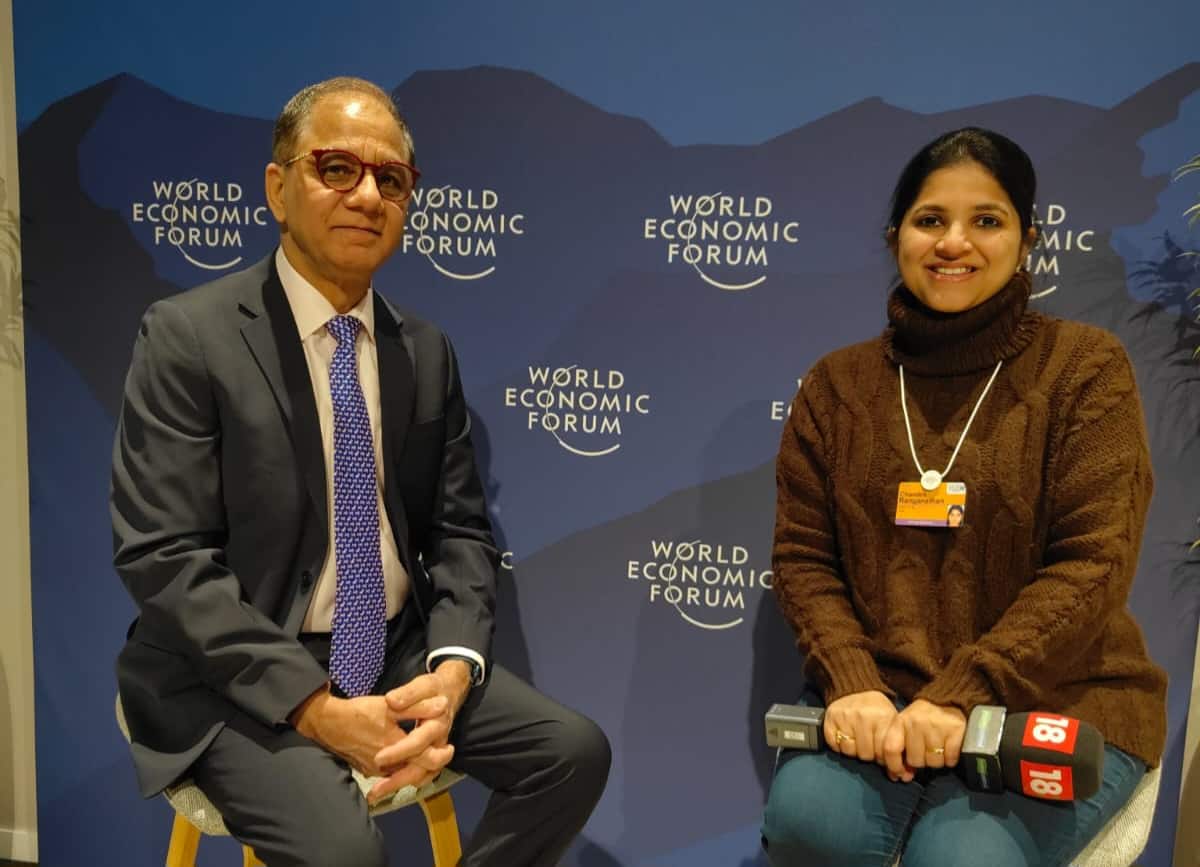
Climate change, geopolitical conflicts and supply-chain disruptions are increasing the likelihood of future disease outbreaks, but global health systems remain inadequately prepared to prevent them from escalating into full-blown pandemics, r Shyam Bishen, Head, Centre for Health and Healthcare, and Member of the Executive Committee at the World Economic Forum, said at the Davos summit.
“We are not very well prepared to handle the next pandemic,” he told Moneycontrol, warning that momentum around pandemic preparedness has slowed even as risks continue to rise.
Bishen was speaking on the sidelines of the 56th edition of the World Economic Forum’s annual meeting in Davos-Klosters, scheduled between January 19 and 23, which will bring together nearly 3,000 leaders from over 130 countries, including around 400 political leaders and 850 chief executives.
Rising frequency of outbreaks
According to Bishen, structural shifts ranging from climate change to geopolitics are making disease outbreaks more frequent, while global coordination to contain them remains fragmented.
“The way climate change is happening, the way we live, and the way geopolitics is causing many conflicts around the world, you will see more and more outbreaks,” he said. “The question is how do we stop them from becoming full-blown pandemics.”
Disruptions to trade and supply chains during geopolitical conflicts further complicate emergency responses, he added, increasing the risk that local outbreaks spiral into global crises.
Global surveillance gaps
The World Economic Forum is working with organisations such as the World Health Organization and the Coalition for Epidemic Preparedness Innovations to build a global disease surveillance system capable of detecting new pathogens and variants early.
“We want to make sure that we are aware of new pathogens and new variants as soon as they emerge,” Bishen said. “It doesn’t matter which corner of the world.”
Artificial intelligence can play a critical role in tracking, diagnosing and analysing outbreaks in real time, enabling faster public-health responses once threats are identified, he added.
Need for faster countermeasures
Early detection alone is not enough without rapid data sharing, Bishen said, stressing the importance of making pathogen data available to pharmaceutical and healthcare companies.
“Once that data is available, then we can make that data available to the private sector, to pharmaceutical and other healthcare companies, so that they can come up with medical countermeasures,” he said.
However, progress on building interoperable global data systems has slowed due to current geoeconomic and geopolitical tensions.
Vaccine manufacturing concentration
Bishen also pointed to the concentration of vaccine manufacturing capacity as a major vulnerability exposed during the Covid-19 pandemic. Production remains heavily skewed toward North America, Europe and parts of Asia, including India and China.
“Only about one percent of the vaccines that are used in Africa are coming from Africa,” he said.
To address this imbalance, the World Economic Forum is working with public and private sector partners to support regional vaccine manufacturing hubs across Africa, Latin America and other parts of Asia, aimed at reducing dependence on a limited number of suppliers during future crises.
‘Not there yet’
While efforts are underway to strengthen surveillance, data sharing and manufacturing capacity, Bishen cautioned that the world remains far from being adequately prepared.
“We are working toward this, but we are not there yet,” he said.
As memories of Covid-19 recede and global attention shifts toward economic and geopolitical challenges, Bishen warned that delays in fixing systemic gaps could leave countries exposed when the next outbreak inevitably emerges.
Rate this article
Login to rate this article
Comments
Please login to comment
No comments yet. Be the first to comment!