
Economy & Markets
6 min read
How Aviation Can Avoid Contrails & Combat Climate Change
Transport & Environment
January 19, 2026•2 days ago
AI-Generated SummaryAuto-generated
Aircraft contrails contribute significantly to global warming by trapping heat. Simple flight path adjustments, like minor altitude changes, can avoid humid, cold air regions where contrails form. Europe could reduce warming by rerouting a small number of flights, particularly long-haul ones over areas like the North Atlantic, which have high contrail warming potential and lower traffic density.
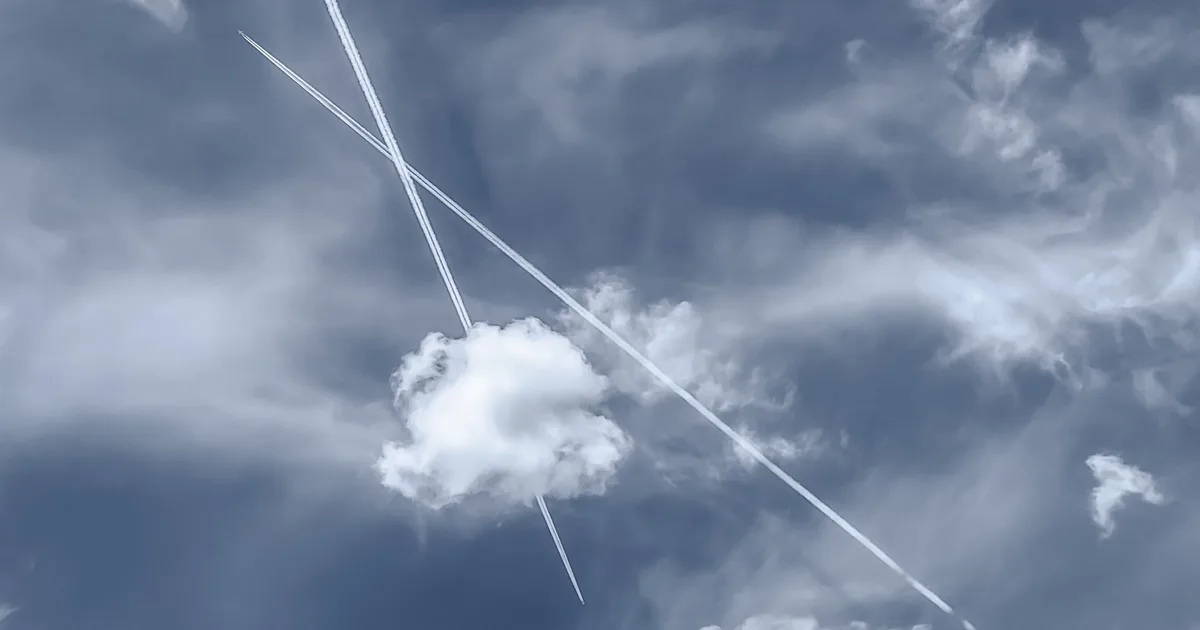
Contrails form as aircraft fly through regions of very cold, humid air. These emissions stay in the atmosphere and form clouds that act like a giant blanket, trapping heat from earth’s surface. Small route adjustments or minor climbs or descents, to avoid the cold and humid atmospheric regions, would significantly reduce contrail formation.
“Contrails are a very concentrated problem. Fortunately, there are straightforward and affordable opportunities to scale up contrail avoidance in Europe. The science and the solutions are clear: by adjusting the paths of just a handful of flights, Europe could prevent years of avoidable global warming”, Alexander Kunkel, Senior Analyst at T&E, explains.
The concentration of contrails not only occurs at specific times of the year, but also around specific locations. The study confirms that the North Atlantic has high contrail avoidance potential - indeed, the airspace above the North Atlantic is dominated by long-haul flights with high contrail warming but has low traffic density. Long-haul flights above five hours alone accounted for 40% of contrail warming while representing only 10% of European departures in 2019.
Contrail avoidance should happen first in regions with high warming but low traffic, T&E recommends. Avoiding contrails when traffic levels are below 60% of their annual peak could have addressed around 70% of European contrail warming in 2019, the study finds. Re-routing can be planned in advance using weather forecasting and before the flight takes off. This would reduce controller workload and ensure safe operations.
"The time to shift into the next gear on contrail action is now. By boosting research, supporting large-scale trials, and designing a policy framework, Europe can pave the way for the deployment of contrail avoidance in the next five to ten years,” Kunkel suggests.
Rate this article
Login to rate this article
Comments
Please login to comment
No comments yet. Be the first to comment!