
Politics
9 min read
Doubts Cast on Cikapundung Stone Inscription's Ancient Origins
Tempo.co English
January 19, 2026•3 days ago
AI-Generated SummaryAuto-generated
A research team has cast doubt on the authenticity of the Cikapundung stone inscription in Bandung, Indonesia. Findings including modern debris, fill soil, and inconsistent script strokes raised suspicions. A local resident confessed to carving the stone in 1987 as a child, suggesting it is not an ancient relic but a work of art. Despite doubts, the stone holds cultural significance.
TEMPO.CO, Jakarta - A research team has expressed doubts about the authenticity of a stone near the Cikapundung River in Cimaung Alley, Tamansari Village, Bandung City, Indonesia, as an ancient inscription. These doubts emerged recently in the conclusions of a research team of archaeologists from several universities, facilitated by the local government.
"From the results of the study, this is not an ancient inscription, estimated to be from the seventh century," said Adi Junjunan Mustafa, Head of the Bandung City Culture and Tourism Office, to Tempo on Sunday, January 18, 2026.
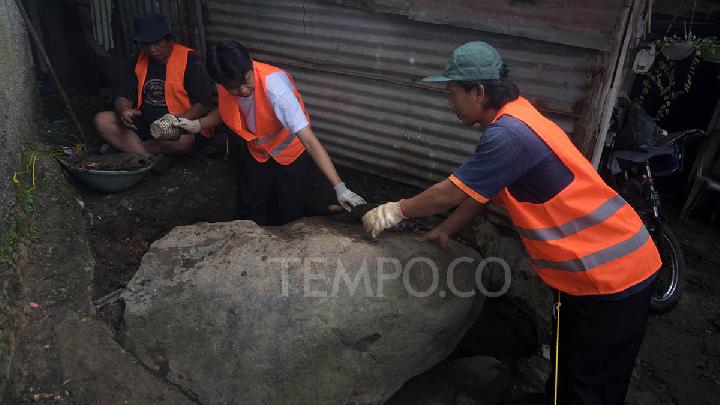
According to Adi, several findings by the excavation team in 2025 raised doubts about the carved stone's authenticity. First, when dismantling the stone, they uncovered modern debris such as plastic and ceramics. Furthermore, a layer of fill soil was visible around the stone. "Then, what caught my attention was whether the writing on the stone was ancient or what it looked like," he said.
After examining the stone, the writing was believed to be different from the ancient script of inscriptions in general. The strokes, according to Adi, tended to be random and not as neat as ancient writing. The third clue that surprised the team was a local resident's confession to the author of the inscription on the stone. "He carved the stone in 1987 using a screwdriver and hammer when he was 12 years old," he said.
According to the person's confession, Adi said, all the characters and symbols, including the head, foot, and bone symbols, were carved out of his childhood interest in foreign scripts. "This claim completely changes the status of the stone from a historical relic to a 'child's work of art.'" This is the report we received, he said.
According to Adi, the carved stone, known as the Cikapundung inscription, has been discussed since 2010, sparking academic controversy and leading to university research. The stone, inscribed with 12 characters and featuring reliefs of skulls and footprints, was initially suspected to be a relic from the Ancient Sundanese period.
Various theories then emerged linking it to the Bojongmenje Temple site and the relocation of the Bandung government center. The stone has been published since 2011 and was the subject of a student's thesis in 2019.
Adi stated that the Department would invite the person claiming to be the stone's carver and hold further discussions with the research team to reach a final conclusion. Despite doubts about its authenticity as an ancient inscription, the research team believes the stone remains culturally and socially significant.
"This stone has become part of the local folklore and collective memory," Adi said. Furthermore, the carved stone is considered an example that history must be viewed from two perspectives: scientific and the direct experience of the community.
Read: Bandung Hit by Cold Temperatures of 19-20 Degrees Celsius
Rate this article
Login to rate this article
Comments
Please login to comment
No comments yet. Be the first to comment!