
Entertainment
17 min read
Remembering Caroline Hamilton: A Giant in the Miniature World
The Guardian
January 21, 2026•1 day ago
AI-Generated SummaryAuto-generated
Caroline Hamilton, co-founder of the London Dollshouse Festival, has died aged 86. She significantly expanded the global audience for miniatures and dollhouses as an artform. Hamilton also authored "Decorative Dolls' Houses," inspiring many. The festival, established in 1985, continues to be a major event for collectors and miniaturists.
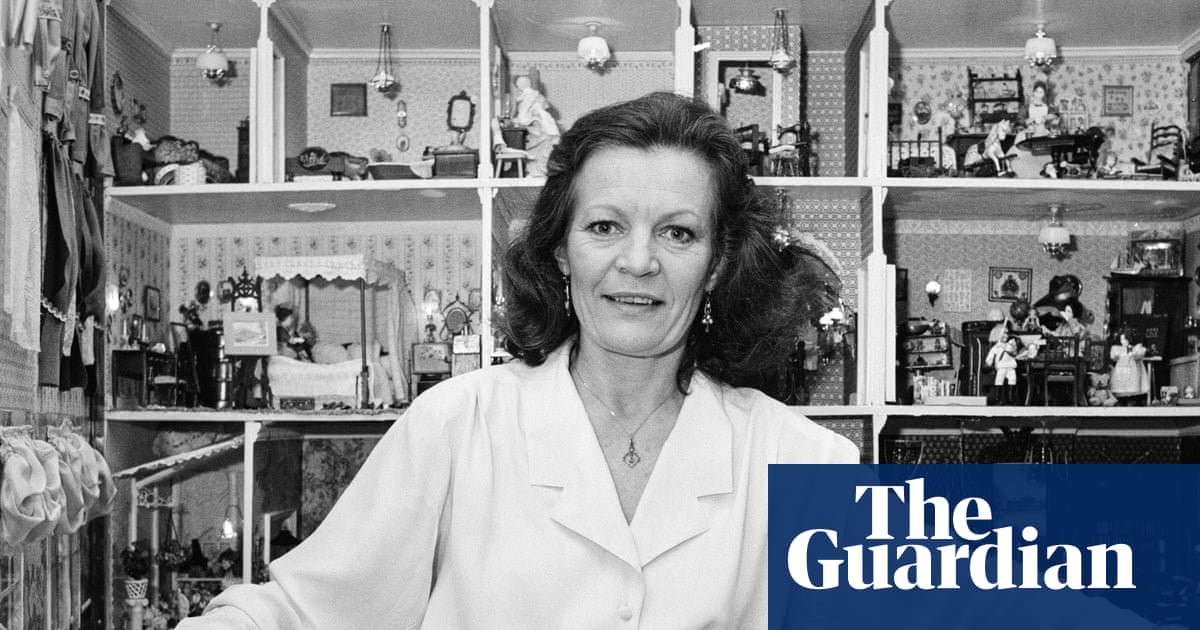
Caroline Hamilton, who has died aged 86, was a big personality in the world of miniatures. As the co-founder of the London Dollshouse festival, she helped to bring the previously niche interest of “dollshousing” – doll’s houses, and rendering the world in miniature – to a global audience as an artform and leisure activity.
The festival, held annually since 1985 at Kensington Town Hall in west London, gives collectors the chance to buy from the world’s finest miniaturists working across diverse media including glass-blowing, woodwork and ceramics, in scales from 1:12 down to 1:144, as well as offering visitors inspiration and information about the doll’s house hobby.
Caroline was determined to make the event an essential destination for anyone with even the most glancing interest in miniatures, with a range of mostly handcrafted work on offer at prices rising from pocket-money to serious-collector level. She continued to run it until 2005, later as the Kensington Dollshouse Fair, and it is now known as the London Dollshouse Showcase.
She was also the author of Decorative Dolls’ Houses (1990), and was determined to publish something quite different from the step-by-step craft books and guides to collecting antique doll’s houses prevalent at the time. Her lively text and anecdotal, opinionated style ignited interest in doll’s houses and miniatures as adult pastime for many readers, and revived a childhood passion for many more. She recounted, for instance, how she and her friend and fellow doll’s house-maker Jane Fiddick scrabbled through dirt in a car park collecting shattered windscreen fragments to use as ice cubes for the 1:12 scale fishmonger’s shop they were then bringing to life.
Caroline first met Jane when they were both undergraduates at Oxford University, and they renewed their friendship as young mothers living in Kew, west London, in the 1970s. Both were avid makers of practical and decorative items for their full-sized homes and decided to take woodworking classes together to improve their skills.
Then they began making, furnishing and electrifying scale models, including caravans and shops, as well as homes of all kinds. Their style was eclectic and often irreverent, resulting in gently affectionate miniaturised renderings of the way people really live. They interpreted subjects as diverse as a flat above a pharmacy inhabited by a “hard-working showgirl” dressed in spangly G-string and marabou-trimmed negligee, inspired in part by news stories of Cynthia Payne’s brothel; and “Sea View”, a pebbledash bungalow, with seagulls on the roof and a mermaid reclining in a shell-edged flower bed planted with overtly plastic hollyhocks; as well as sublimely elegant and restrained classical miniature scenes. Their tastes and skills encompassed all styles and eras. The book Our Dollshouses (2015) chronicles their collection, which is now on permanent display at Newby Hall in North Yorkshire.
Caroline was born in Budapest, on the day Hitler invaded Poland. She was the elder daughter of a German-Swiss mother, Lys (nee Lang), and an English father, Henry Threlfall, who served as an SOE officer during the second world war. The family moved to Wales for the duration of the war. Later, Henry’s job with Unilever took them to Belgium, and to Argentina during the Perón years. Caroline was sent as a boarder to Badminton school in Bristol, seeing her family only in the school holidays after long transatlantic voyages.
She went on to study German and French at St Hugh’s College, Oxford, graduating in 1961, and in 1964 married Patrick Hamilton, an executive with Total Oil. Caroline was told that having children might increase the hearing loss she had started to experience at university, but they went on to have two sons, Alexander and Dominic, and a daughter, Stephanie. Later she wore hearing aids.
When she started making miniatures, her frustration at the lack of a local fair for inspiration propelled her into founding the London Dollshouse festival as a model of the show she would like to visit – one “that fulfils your highest expectations and inspires your creativity and collecting”, as one of her early flyers put it.
Caroline continued to run the event even after her diagnosis with cancer in the late 1980s and Patrick’s death from a heart attack at the 1993 festival. Her meticulous attention to detail set the show apart from its competitors, drawing makers offering museum-standard work to appreciative collectors. She was relentlessly pragmatic; focused on fostering enjoyment of the hobby, and encouraging emerging talent, providing support and advice, and, long before social media, a platform where buyers, makers and aficionados could meet and share.
Among her early proteges were Kevin Mulvany and Susie Rogers, who made a doll’s house for Caroline inspired by her grandparents’ home in Versailles, and are now renowned makers, having interpreted countless spectacular buildings in miniature. She also helped to develop the careers of miniaturists including Laurence St Leger, a former jeweller, whose functioning Swiss Army knife won the fair’s Perfection in Miniature competition in 2015, which Caroline continued to judge even after stepping down from running the show.
She is survived by Alexander, Stephanie and Dominic, her grandchildren, Emilie, Théo, Sophia, Caspar, Isabel, Julian, Thomas and Nico, and her sister, Monica.
Rate this article
Login to rate this article
Comments
Please login to comment
No comments yet. Be the first to comment!