
Entertainment
23 min read
My Daughter's Tough Literary Challenge: The Best Books I Read
The Age
January 18, 2026•4 days ago
AI-Generated SummaryAuto-generated
A literary challenge to read 52 books from 52 countries in 52 weeks was modified to 52 fortnights due to the author's slow progress. The author recounts experiences with diverse novels, highlighting those offering profound global insights, from colonial Malaysia to modern-day Ukraine. The journey emphasized the value of diverse reading and stepping outside comfort zones.
Advertisement
Opinion
My daughter set me a tough literary challenge. What a journey it’s been
David CroweEurope correspondent
January 18, 2026 — 7:30pm
January 18, 2026 — 7:30pm
You have reached your maximum number of saved items.
Remove items from your saved list to add more.
Save this article for later
Add articles to your saved list and come back to them anytime.
The smart response to a set of made-up rules is to tweak them before anyone knows you will break them. We do it with diets. Treasurers do it with budgets. I did it with books.
About a year ago, I was nearing certain failure in my attempt to read my way around the world. I was supposed to be on the latest leg of a journey that began during the travel bans of the pandemic, when I aimed to read 52 books from 52 countries in 52 weeks.
My daughter set me the challenge, and it was almost effortless in the first two years, when I escaped Australia with every turn of a title page, and wrote about it here.
By the end of 2024, I was stuck. Sometimes it took me weeks to get through a book. Then it took me forever to choose the next one. That’s why this column is about reading 52 books from 52 countries in 52 fortnights.
Advertisement
If this was reality television, I would have been voted off the island. Luckily, this challenge had no jury and only one judge. So I bent the rules.
It wasn’t that all the books were bad. It’s just that I was slow, like an exhausted traveller missing a flight.
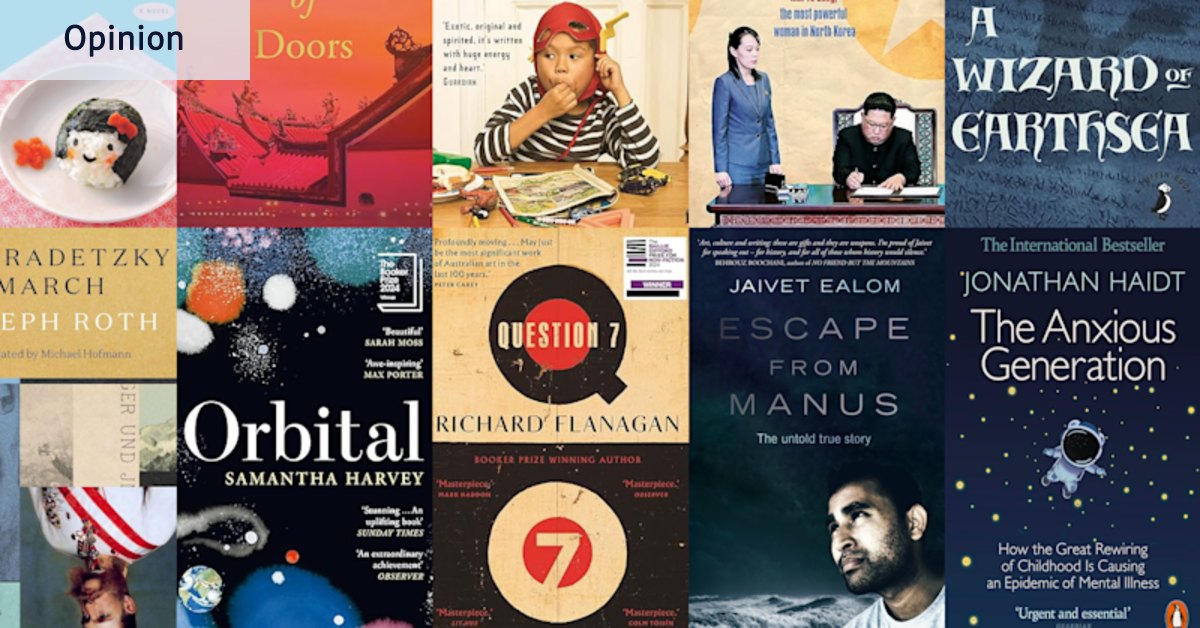
I loved my time in Tokyo with a strange narrator in Convenience Store Woman, by Sayaka Murata. And in colonial Malaysia during a visit by Somerset Maugham in The House of Doors, by Tan Twan Eng. I was immersed in Santo Domingo and New Jersey in The Brief Wondrous Life of Oscar Wao, by Junot Díaz. I was moved by the tale of a young boy in Libya thanks to Hisham Matar and his novel, In The Country of Men.
The thing about the arbitrary list, however, is that I could land in a place I was desperate to leave. I regretted stopping in North Korea to read about Kim Jong-un and his family in The Sister, by Sung-Yoon Lee. This took an academic approach to what should be an engrossing story of dynastic politics and totalitarian cruelty.
Advertisement
Thank goodness for great writers such as Chimamanda Ngozi Adichie. Her collection, The Thing Around Your Neck, landed me in short stories from Nigeria, but many will know her as a powerhouse who roams across national borders. One story, about an arranged marriage, was even better on a second reading. The recent news about the death of her son is heartbreaking.
I experimented with stories from worlds that were invented or no longer existed. One was The Wizard of Earthsea, by Ursula Le Guin. The other was The Radetzky March, by Joseph Roth, set during the collapse of the Austro-Hungarian Empire.
Another book from a different world was Orbital, by Samantha Harvey, set on the international space station. This was light on plot and heavy on description, more like a long poem than a short novel. Intriguing, but not fully satisfying.
Returning to Australia, at least for a short while, I was glad I chose Question 7, by Richard Flanagan, a meditative memoir. Another book was impossible to label with a single country: Escape From Manus, by Jaivet Ealom, a Rohingya refugee, moved rapidly from Myanmar to Papua New Guinea and beyond. He assumed a false identity to escape, and it is a fascinating tale.
I know the target of 52 books can seem unserious, almost like a contest we should grow out of after school. In fact, it has two great qualities. First, it makes movement essential: you change landscapes and characters with each new title. Second, it forces risk: there can be a sameness to the stories from your own country, and there is a lot to be said for leaping out of your comfort zone.
Advertisement
There was not much comfort in my visit to Albania in Broken April, by Ismael Kaldare, a bleak novel of a blood feud. Nor in the killing fields of Cambodia, in Surviving Year Zero, by Savonnora Ieng, a clear account of an ugly history. And not in Some People Need Killing, by journalist Patricia Evangelista, about political murder in the Philippines.
I had time for only a single title from the US, something of a travesty, but at least I chose well: The Anxious Generation, by Jonathan Haidt, is an essential analysis of children and mental health in the iPhone era.
I was engrossed in Caledonian Road, by Scottish author Andrew O’Hagan, who brought the modern class structure alive in a big story that ranged across elite and squalid London.
Then I was off to the valleys of Wales in The Life of Rebecca Jones, by Angharad Price. This short novel was a wonderful discovery for the way it evoked village life over generations. Soon afterwards I was in Ireland (and elsewhere) in Barcelona, a brilliant collection of short stories by Mary Costello.
Advertisement
The more I read, the more sceptical I became about prizes for global fiction. I’ve had mixed success with the recent winners of The International Booker Prize, but I’ve loved some that did not even make the shortlist. Lost On Me, by Veronica Raimo, was one example. It did what so many cover blurbs promise but not enough books deliver: made me laugh out loud.
What stood out were the books that offered insight into the world as it is.
One of the best books of these 52 fortnights also missed out on the Booker. This was Lullaby, by Leila Slimani – an unsettling and absorbing account of a Moroccan nanny in Paris. It should have won in 2023.
What stood out were the books that offered insight into the world as it is, not always as we would like it to be.
One was The Death of a Soldier Told by His Sister, by Olesya Khromeychuk, a story of the war in Ukraine, and a family from Lviv, that avoided false heroics. Another was Necropolis, by Boris Pahor, a Slovenian writer who took me into parts of the Holocaust I had not known. When the year ended with the horror of the Bondi attack, it seemed to me even more necessary to read and remember the accounts that show where hatred leads.
Advertisement
Without a target, I might not have read Born A Crime, by Trevor Noah, who used to host The Daily Show. His memoir of growing up in South Africa is funny and thoughtful, which is why it has sold by the millions. The star of the tale is his mother, who made him go to church three times on Sundays.
Without a deadline, I would not have picked up a very, very short book to race through Denmark. This was The Emperor’s New Clothes, by Hans Christian Andersen, a tale we all know but can all read again. It skewers political vanity with a smile – and we all know the modern ruler who wears the same old fashion.
The best of the books? Looking back, I think of Homegoing, by Ghanaian-American writer Yaa Gyasi, as the perfect reason to read fiction. It took me somewhere I had never been, it brought characters alive, and it did this with light but perceptive prose. It’s the kind of book you give to friends in the hope they will love it, too.
Thank you for reading and subscribing. I wish you the best for the year ahead. We cannot be sure where the world is heading, so it might help to get lost in a good book.
Advertisement
You have reached your maximum number of saved items.
Remove items from your saved list to add more.
More:
Literature
Review
Opinion
For subscribers
David Crowe is Europe correspondent for The Sydney Morning Herald and The Age.Connect via Twitter or email.
Rate this article
Login to rate this article
Comments
Please login to comment
No comments yet. Be the first to comment!