
Space & Astronomy
17 min read
How Flowers Help Bee Viruses Jump from Hives to Wild Pollinators
Earth.com
January 18, 2026•4 days ago
AI-Generated SummaryAuto-generated
Honey bee viruses spread to wild bees through shared flowers, impacting pollination and plant communities. Researchers found that popular plants can act as transmission hubs, even with minimal direct bee contact. This spillover poses risks to wild pollinators and agricultural systems. The study emphasizes considering disease transmission when planning habitat restoration.
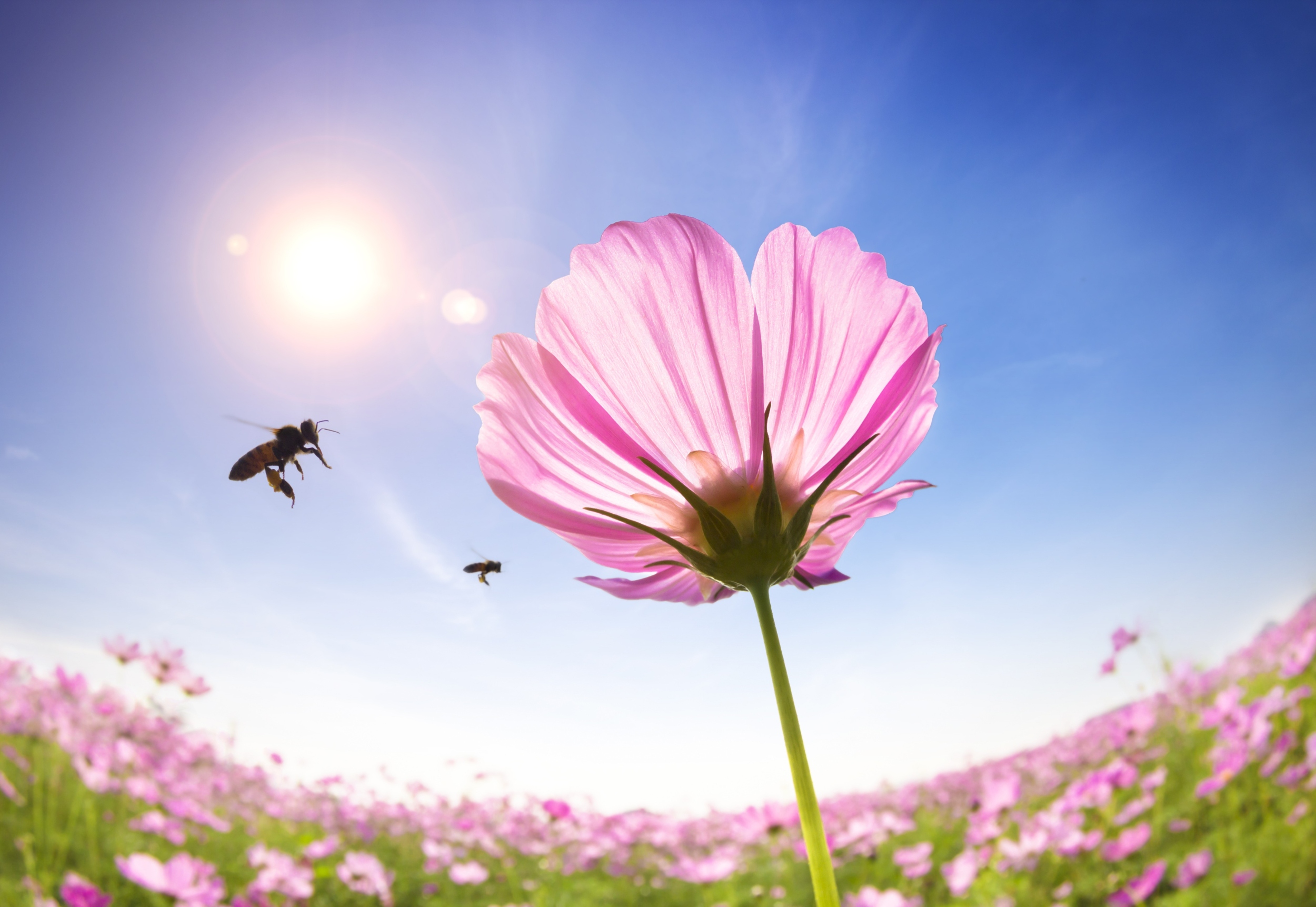
Viruses from honey bee hives also appear in wild bees that feed on the same flowers.
When infections build, pollination can falter and change plant communities, with real costs for farms and wild habitats.
During spring bloom in Israel’s Judean Foothills, researchers screened wild mining bees and mapped local flowers.
The work was led by Idan Kahnonitch, a Ph.D. student at at the Hebrew University of Jerusalem (HUJI).
The team studies how plant choices and land management affect wild pollinator health, especially when infections stay quiet.
Shared flowers allow virus spread
Across the landscape, patterns in flowering plants and bloom abundance matched where bee viruses were detected – and where they were absent.
Shared blossoms bring many bee species into close contact, and that contact can move viruses between bodies and mouths.
When an infected forager deposits particles on pollen or nectar, another visitor can ingest them and start an infection.
Experiments show that spillover – infection moving from one species to another – can begin after bees share flowers.
That pathway makes a single popular plant a possible hub, even when bees rarely touch each other directly.
Why wild bees are important
Mining bees in the genus Andrena work alone, and they pollinate both crops and native plants during short spring windows.
Unlike Apis mellifera honey bees, each female makes her own nest, which cuts contact and slows virus spread.
Global food systems still lean on insect pollination for many crops, so losses in wild bees can echo outward.
That dependence raises the stakes when infections reach wild species that never enter managed hives.
Bee viruses move between species
Varroa destructor mites feed on developing honey bees and pass viruses between hosts, accelerating spread inside dense colonies.
Genetic strains, genetic versions with small sequence differences, can match between managed and wild pollinators living side-by-side.
In the new field survey, sacbrood virus showed the clearest link, with a 98.3% match between sequences from both bee groups.
Even low infection levels can matter when a pathogen moves into a species with little prior exposure or different defenses.
Virus spread across landscapes
Site boundaries mattered less than the wider landscape, because bees search beyond one patch for meals and mates.
Researchers measured floral resource availability (FRA), a score reflecting how much food was in bloom, across areas extending up to 0.6 miles.
Higher FRA often lined up with more virus detections in mining bees, suggesting that richer landscapes also increase exposure opportunities.
That association sets boundaries, since a flower-rich restoration could still raise risk if FRA stays high and many species crowd the same blossoms.
Plant choices change infection risk
Not all flower mixes behaved the same, and some plant communities tracked with viruses more than raw flower counts did.
Certain plants stood out, with Erucaria hispanica appearing more often in sites where mining bees tested positive for two viruses.
Echium judaeum and Notobasis syriaca showed the opposite pattern, and those sites tended to have fewer positive detections.
Flower traits likely matter because petals and pollen control where a virus lands and how quickly heat and light break it down.
Surveys show uneven infection
Researchers sampled bees across many locations, comparing wild mining bees with nearby honey bees feeding on the same flowers.
Infections appeared only occasionally in mining bees, while honey bees carried viruses far more often and across more sites.
That contrast suggested shared exposure rather than equal risk, with managed bees acting as a larger reservoir for viruses in the landscape.
Plant surveys showed many flowering species were present, but only a smaller set actually drew regular bee visits, narrowing where transmission was most likely.
What this study cannot prove
Correlation can point to risk, yet it cannot prove that a particular flower directly infects a bee on the spot.
The team used presence and absence results, so a negative test could still miss brief infections or low virus amounts.
Patterns around deformed wing virus also blurred, because floral diversity and honey bee density rose together at some sites.
Those limits keep the results in bounds, and they point toward field experiments that change flowers while holding bee numbers steady.
Planning habitat with disease
Habitat projects often add flower strips and wild bloom patches, yet the new results show that plant choices matter.
Selecting species that draw the same bees to the same petals can raise contact rates, even when food looks plentiful.
“This means that decisions about habitat management and restoration, often focusing actions on the plant communities can have unintended consequences for pollinator health if disease transmission is not taken into account,” said Kahnonitch and colleagues.
Conservation plans can respond by tracking disease signs, spacing plantings, and coordinating with beekeeping to reduce high-risk overlap.
Managing future risks
Taken together, the evidence ties bee viruses to the way landscapes feed pollinators, not just to the bees themselves.
Managers can use that insight, yet they still need long-term monitoring and trials that test whether plant choices lower transmission.
The study is published in the journal Ecological Applications.
—–
Like what you read? Subscribe to our newsletter for engaging articles, exclusive content, and the latest updates.
Check us out on EarthSnap, a free app brought to you by Eric Ralls and Earth.com.
—–
Rate this article
Login to rate this article
Comments
Please login to comment
No comments yet. Be the first to comment!