
Politics
19 min read
Australia's 'Peace Board' Membership: A Risky Proposition
The Guardian
January 21, 2026•1 day ago
AI-Generated SummaryAuto-generated
Analysts argue Australia joining Donald Trump's "board of peace" offers no benefit and significant risk. The proposed board, potentially including controversial figures, is seen as a cartel of self-interest, not a genuine peace initiative. Australia is considering the invitation but faces pressure to reject it due to concerns over international law and national interest, with some viewing it as a threat to a rules-based order.
The company you keep.
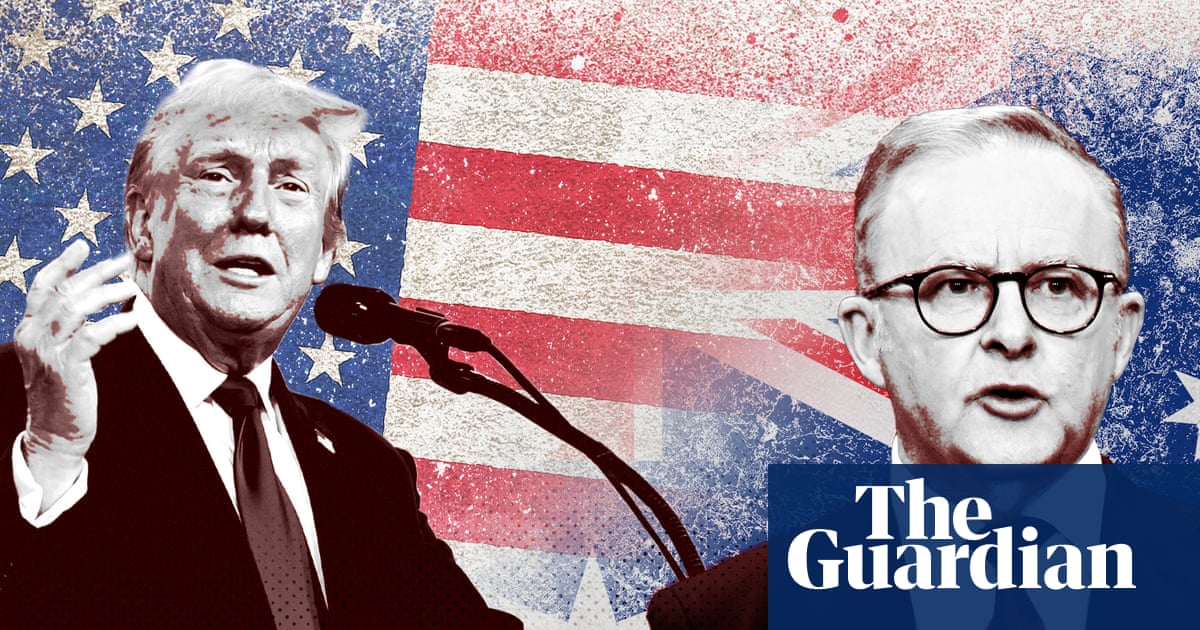
Vladimir Putin, Viktor Orbán, Donald Trump.
Australia’s accession to the US president’s self-titled “board of peace”, always unlikely, appears now an impossibility, analysts argue.
Australia could not, in any conscience, acquiesce to joining a group that could include the names above, autocrats and despots convinced that might is right, that violence is legitimate, and that they exist beyond the reach of the law.
There is no benefit to Australia to joining, there is no influence it could seriously hope to hold. There is only risk in being, rightly, held accountable for whatever misadventure and chaos the “Greatest and Most Prestigious Board ever assembled” unleashes on the world.
Trump has extended an invitation to join his board of peace to a Russian president actively waging war on a neighbouring country. Even as he panhandles for peace board members, Trump is threatening to invade a Nato ally to seize Greenland, and telling Norway that, because he didn’t win the Nobel, he no longer feels an obligation “to think purely of Peace”.
The inclusion of property developers, and no representative from Gaza itself, speaks volumes about the board’s disposition and intent. This is no board of peace, rather a cartel of self-interest.
Few voices in Australia have rushed to extol the board’s merits. But few too, perhaps cautious of Trump’s growing bellicosity, have condemned it out of hand.
Most elected representatives have been circumspect in their language.
The deputy prime minister, Richard Marles, said Australia “welcomes” the invitation, which is under active consideration by the government: “we will talk that through with America to understand what this means and what is involved”. The opposition wants to know more “about the objectives, structure, membership and implications” before making any commitment.
But the Greens’ defence spokesperson, David Shoebridge, accused Trump of “trying to sell Palestinian sovereignty for US$1bn per seat while Palestinians are still being bombed and starved under the so-called ‘ceasefire’”.
The retired, too, have been more unconstrained. Former senator and Labor powerbroker Doug Cameron argued on X that Trump’s proposal should be rejected.
“We should work with and support the UN, not … autocrats and Trump sycophants. Big test for our sovereignty, leadership, and dignity. Time to show some backbone.”
Diplomatic sources in Australia, speaking anonymously, say officials have been speaking with counterparts in like-minded liberal democracies about how best to respond to Trump’s proposal.
One told the Guardian it was “inconceivable” Australia would join the board of peace, while others argued coordinating a polite declination with other nations – without giving the appearance of collusion – was vital to ensure Australia was not isolated in the view of the US president.
Ben Saul, the Challis Chair of International Law at the University of Sydney, said, “it’s shaping up to be the kind of body or the kind of company that Australia would absolutely not wish to keep”.
Sign up: AU Breaking News email
“I think it would be a serious mistake for Australia to join an organisation like this, which doesn’t have the kinds of safeguards for international law and which would frankly not be in Australia’s national interest.
“I think it’s unfortunate that Australia has been very weak on pushing back against US violations of international law under Trump over the last year. We’ve been absolutely in appeasement mode, trying to keep the security alliance afloat, trying to dodge punitive economic penalties, such as tariffs. All of which is understandable, but at the same time, around us, the international order is collapsing.”
Nations are free to choose to sign up to unchecked US domination, Saul said, but the true nature of Trump’s board of peace should not be misunderstood.
“It’s not genuine multilateralism, it’s the US trying to legitimise the exercise of US superpower and trying to get others on board.”
Australia has tied itself to US adventurism before, with catastrophic results. That Tony Blair, a key architect of the calamitous war in Iraq launched on specious intelligence, has accepted a position on the board of peace executive board, further underlines its absurdity.
The price of peace, it appears, has been set at US$1bn, for a permanent seat on Trump’s board, but always under his dominion and total control.
The board of peace was formally authorised to oversee Gaza’s postwar transition by a UN security council resolution in November. But its charter, now public, makes no mention of Gaza at all, instead granting the board a broad, nebulous remit of seeking “enduring peace in areas affected or threatened by conflict”.
Australia, as a middle-sized, trade-dependent, island continent, has benefited enormously from the so-called international rules-based order of the post-second world war world (imperfect and malleable though that order has always been).
The peace and prosperity of the last seven decades have been underpinned by an espoused commitment to rules.
To acquiesce to the board of peace would be to abandon the predictability and balance of a rules-based order for a realist fistfight: where powerful countries would bully, coerce, threaten and, if necessary, extinguish, those weaker. Australia would suffer.
By joining the board, Australia would be committing itself to the very worst excesses of the Trump regime: ours would be the invasion of other countries, the plundering of foreign resources, the extortion of allies.
For Australia to tie itself to the board of peace would be a disastrous act of national sabotage, the last semblance of an independent foreign policy abandoned for the hope of a fleeting nod of approval from a vain, volatile ersatz emperor.
Kissinger’s aphorism is often misunderstood. But it has, perhaps, never have felt more accurate.
Kissinger meant to make the opposite point, to argue that America should act in a way that showed it could be trusted. But he revealed much when he said feared an inconsistent America would be seen as capricious and feckless ally, that the world might come to believe: “it may be dangerous to be America’s enemy, but to be America’s friend is fatal”.
Rate this article
Login to rate this article
Comments
Please login to comment
No comments yet. Be the first to comment!