
Sports
13 min read
Audi Joins Call for FIA Action on 2026 F1 Engine Rule Loophole
Motorsport.com
January 20, 2026•2 days ago
AI-Generated SummaryAuto-generated
Audi has joined calls for the FIA to address a potential loophole in 2026 F1 engine regulations concerning compression ratios. Teams suspect rivals might be exploiting thermal expansion of conrod materials to gain an advantage. Audi's technical director emphasized the need for a level playing field, drawing parallels to historical regulatory controversies. The FIA is scheduled to discuss dynamic compression ratio measurement methods.
There are several unfortunate echoes from grand prix history in the controversy surrounding compression ratios in the new generation of hybrid engines. Formula 1 teams are naturally exhibiting a level of paranoia about the prospect of having competitive advantage – however slight – effectively locked in for the whole season.
For 2026, the compression ratio has been reduced from 18:1 to 16:1. The amount of compression naturally has an effect on the pressurisation of the air/fuel mixture and the combustion process, rendering this a critical area.
But, given the practical difficulties of measuring compression while the engine is operating, the wording of the regulations states that measurements will not be taken during the working cycle. It has been claimed that Mercedes and Red Bull are using conrod materials, whose thermal expansion properties yield an increase in compression ratio at operating temperature.
There are parallels here with the FIA’s attempts to contain ground-effect aerodynamics in the early 1980s by enforcing a minimum ride height, measured by sliding a wooden block of appropriate dimension under the car while it was stationary in the pitlane. Brabham designer Gordon Murray ingeniously circumvented this by mounting the bodywork on pneumatic struts which held it at legal level while the car was at rest, then compressed under load while it was out on track.
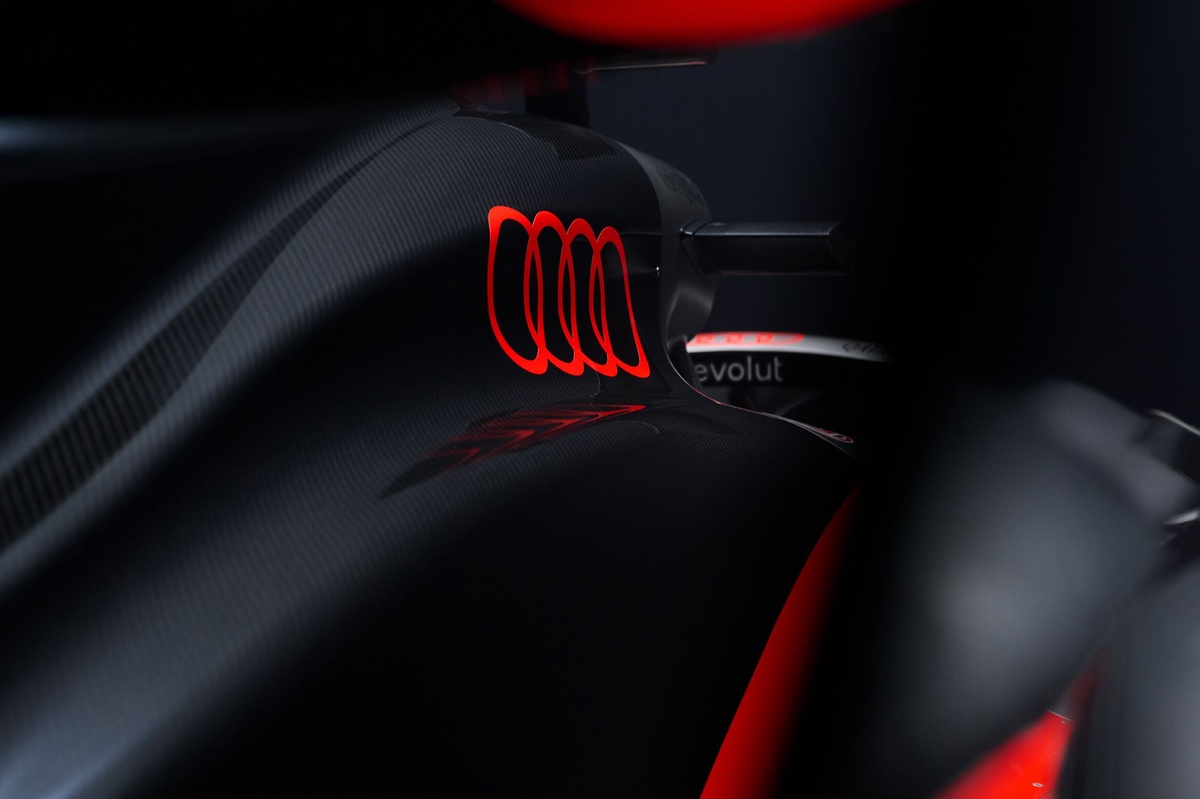
“We have to, as we do, trust the FIA with making the right decisions here,” said Audi technical director James Key, speaking at the team’s 2026 car launch.
“It's new regs. You've got to have a level playing field. If someone came up with a clever diffuser and you said it's not the right thing to do, no one else can have it, but you can have it for the rest of the year. It doesn't make sense. We'd never accept that.”
George Russell, Mercedes; Max Verstappen, Red Bull
Photo by: Zak Mauger / LAT Images via Getty Images
Here Key is obliquely referencing 2009, when three teams - Toyota, Williams and eventual champions Brawn - fielded so-called ‘double diffusers’ which exploited the phrasing in the rulebook of how the newly reduced diffuser dimensions would be measured. These were controversial for several reasons, not just their dubious legality: other teams had made engineering choices around their gearbox design, monocoque and KERS installation which made adopting a double-height diffuser either difficult or outright impossible.
Adrian Newey, then technical director of Red Bull, was outspoken in saying there was a political dimension to FIA president Max Mosley’s refusal to ban the devices straight away. Newey’s belief is that Mosley had taken umbrage at McLaren and Ferrari joining forces in the new Formula One Teams Association to thwart his regime, and holding back on a diffuser ban kept them at a disadvantage because they were among the teams who had not spotted the loophole.
“I think if it's sort of bypassing the intent of the regulations, then it has to be in some way controlled,” said Key.
“So we trust the FIA to do that, because no one wants to sit a season out if you've got a blatant advantage that you can do nothing with in a homologated power unit. So I think for us, hopefully, the FIA will make the right decisions.”
Red Bull Powertrains director Ben Hodgkinson has called the controversy “a lot of noise about nothing” and emphasised that “I’m confident that what we’re doing is legal”.
The FIA has enshrined within the 2026 engine regulations a performance-balancing framework known as ADUO - Additional Development Upgrade Opportunities. But for the time being, the governing body has emphasised that there is no evidence to back up the claims that compression ratios are being ‘gamed’ in this way.
Absence of evidence does not equate to evidence of absence, though. It’s understood that a key item of the agenda on the FIA’s next meeting with F1’s engine manufacturers – 22 January – will be a discussion of future means of measuring compression ratios dynamically.
But there will be no quick or easy fix – assuming that the exploit is happening and delivers the claimed benefits, said to be in the region of 10bhp.
Photos from Audi launch
Rate this article
Login to rate this article
Comments
Please login to comment
No comments yet. Be the first to comment!