
Space & Astronomy
11 min read
Resilient Life Thrives in Atacama Desert Soil, New Study Finds
ETV Bharat
January 20, 2026•2 days ago
AI-Generated SummaryAuto-generated
Despite extreme aridity, high salinity, and temperature fluctuations, the Atacama Desert soil harbors resilient life. A study examined nematodes, revealing their survival strategies in this harsh environment. Findings indicate asexual reproduction at high altitudes and increased biodiversity with precipitation. The research highlights the adaptability of soil organisms and offers insights into climate change impacts.
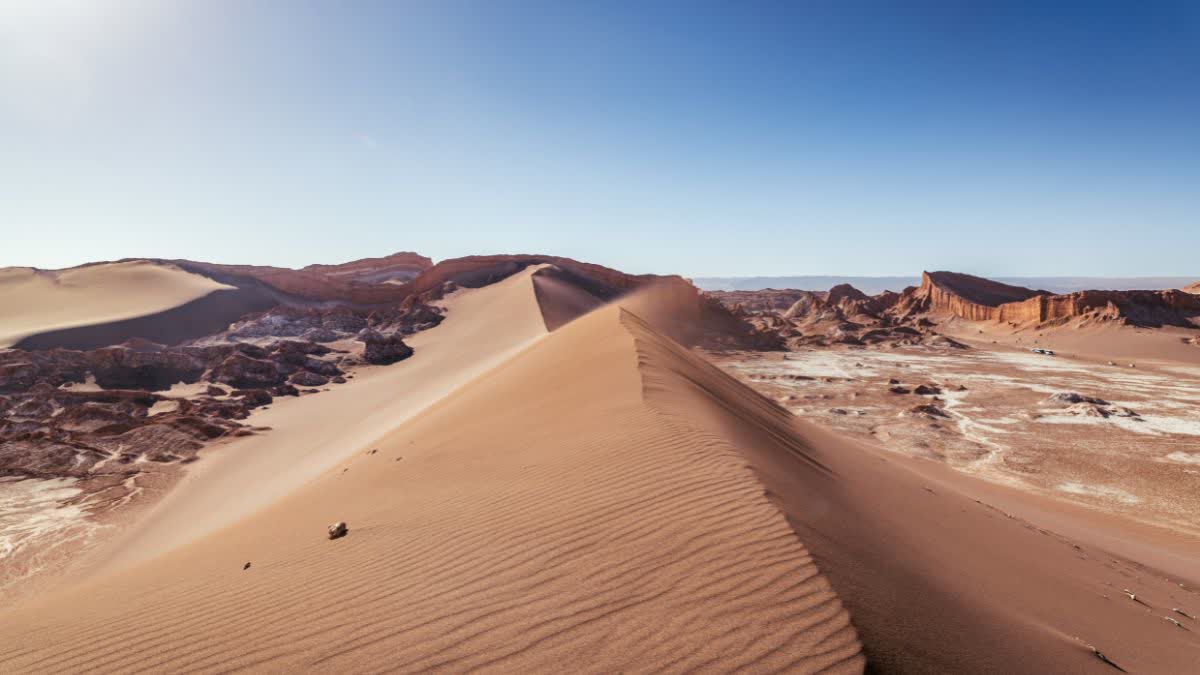
Hyderabad: The Atacama Desert is one of the most arid regions in the world, identified by the lack of rainfall, high salt content in the soil, and extreme temperature fluctuations, which collectively make it one of the most hostile places on earth. Still, life can persist in the soil despite the harsh and extremely dry conditions, reveals a new study led by the University of Cologne, Germany.
An international team of researchers, from the fields of zoology, ecology and botany, examined tiny nematodes—the most common soil organisms—in the Chilean Atacama Desert, revealing the strategies used by different nematodes to survive under these conditions.
Published in the journal Nature Communications, the study "Geographic distribution of nematodes in the Atacama is associated with elevation, climate gradients and parthenogenesis" sheds new light on the links between patterns of biodiversity and the environmental parameters that define a landscape.
What are Nematodes
Nematodes are among the most abundant animals on Earth and belong to the phylum Nematoda. They exist either as parasites in animals and plants or as free-living organisms in soil, freshwater, marine environments, and beyond. Nematodes play a vital ecological role by regulating bacterial populations, contributing to nutrient cycling, and serving as key indicators of soil health. Their remarkable adaptability allows them to thrive in diverse habitats, including the deep sea, Arctic regions, and highly saline soils.
“Soils are important for the performance of an ecosystem, for example, for carbon storage and nutrient supply. This is why understanding the organisms, i.e. not microbes, but multicellular animals, that live there is so important,” says Philipp Schiffer from the University of Cologne’s Institute of Zoology and one of the authors of the study. “Data on soils in extreme ecosystems such as the Atacama Desert is still scarce.”
Nematode Diversity in the Atacama Desert
Researchers from the Collaborative Research Centre 1211 studied nematode populations across six diverse regions of Chile's Atacama Desert, ranging from humid highlands to saline flats and foggy oases. They analysed samples from various terrains to assess biodiversity, reproduction strategies, and population structures. Key findings of the research include:
Asexual reproduction was more common at higher altitudes, supporting the theory that it offers advantages in extreme environments.
Biodiversity increased with precipitation, and temperature differences significantly influenced population composition.
Resilient ecosystems were found even in harsh, remote areas, suggesting arid regions may host more biodiversity than previously thought.
Warning signs emerged: simplified food webs in some areas indicate ecological damage and heightened vulnerability to disruption.
“In light of increasing global aridity, which is affecting more and more regions worldwide, these results are becoming increasingly relevant. Understanding how organisms adapt in extreme environments and which environmental parameters cause them to spread can help to improve estimation of the ecological consequences of climate change”, says Schiffer.
The results suggest that macroecological patterns—such as precipitation gradients and the influence of altitude—can be detected even in extreme environments and at the genetic level. This study marks a significant step toward improving our understanding of how soil organisms respond to environmental changes on a global scale.
Rate this article
Login to rate this article
Comments
Please login to comment
No comments yet. Be the first to comment!