
Space & Astronomy
19 min read
Arctic Cooling Breakthrough: Cloud Brightening Simulations Show Promise
AGU Newsroom
January 22, 2026•2 hours ago
AI-Generated SummaryAuto-generated
Simulations suggest spraying sea salt particles could brighten Arctic clouds, cooling the region and potentially restoring sea ice. This approach, under a moderate emissions scenario, aims to maintain Arctic temperatures with minimal impacts beyond the region, though Arctic ecosystem effects were not simulated.
AGU News
Press registration is open for the 2026 Ocean Sciences Meeting in Glasgow, Scotland
Staff, freelance and student journalists, press officers and institutional writers are eligible to apply for complimentary press registration for the conference, which will convene 22-27 February. [media advisory][OSM26 Press][eligibility guidelines][preview conference hotels]
Featured Research
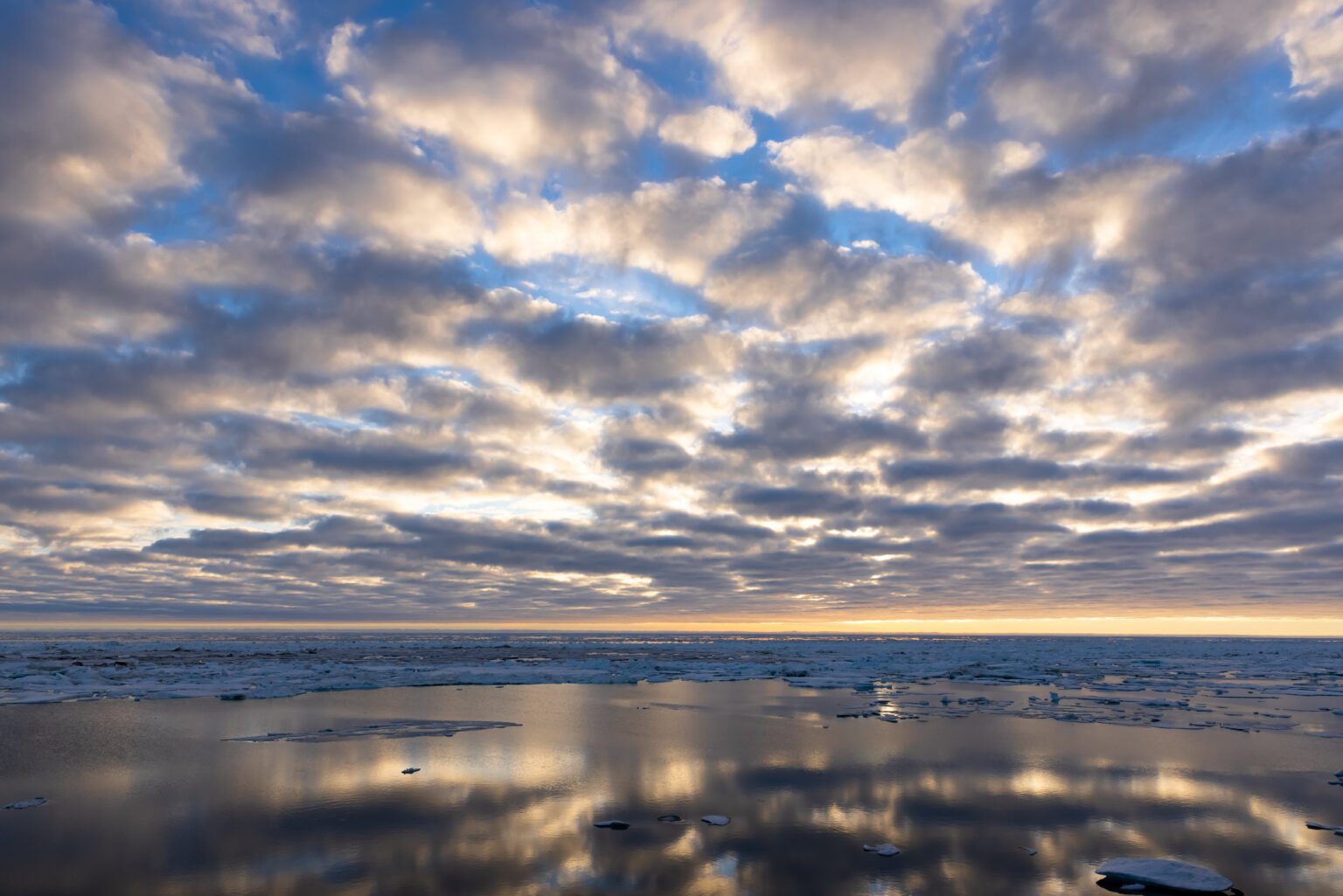
Cloud brightening could cool the Arctic without affecting other regions, simulations indicate
Spraying sea salt particles into the low Arctic atmosphere could brighten clouds, significantly cooling the region and restoring Arctic sea ice, according to simulations using three separate Earth system models. The models assumed a “middle-of-the-road” greenhouse gas emissions scenario in which global warming reaches three degrees Celsius by 2100, with the goal of using marine cloud brightening to maintain near-current temperatures in the Arctic. The approach also showed minimal climate impacts beyond the Arctic from spraying salt particles — though the researchers stressed that their simulations didn’t account for impacts to communities, ecosystems, and atmospheric chemistry within the Arctic. [Earth’s Future study]
Climate change will increase soil erosion, especially in dry regions
As rainfall gets less frequent but more intense — the forecast for many regions due to human-driven climate change — soil erosion will increase, especially in drier climates and places with coarse soil. Researchers arrived at this result after feeding different rainfall scenarios into computer models to simulate the resulting soil erosion over time in different landscapes. The outcome echoes long-term observations from real-world monitoring, the team notes. Erosion can negatively impact soils’ abilities to regulate water, carbon, and nutrient cycles, as well as to provide habitat for plants and animals. [JGR Earth Surface study]
Climate change may dry out tropical America even more than previously thought
Annual rainfall across tropical America will likely decline as human emissions heat up the Earth, climate models project, exacerbating the risk of Amazonian wildfires, Panama Canal disruptions, and other impacts to agriculture, ecosystems, and water resources. However, in a new study, researchers say most models underestimate this effect. The team used real-world observations to correct for this bias in 42 climate models and found that every degree Celsius of warming caused a 46-millimeter drop in the region’s annual rainfall — 50% more than expected without the correction. [Geophysical Research Letters study]
A viscous fluid could mitigate earthquakes triggered by industrial activity
Fracking, geothermal energy production, storage of captured carbon, and other industrial activities beneath Earth’s surface commonly trigger earthquakes that can sometimes threaten lives and livelihoods. Investigating ways to minimize this hazard, researchers found that a shear thickening fluid — a mix of silica powder and ethylene glycol that gets more viscous as friction builds up around it — helped a simulated fault slip more stably and silently in lab experiments with a friction-generating machine. Injecting similar fluids into fault zones could help limit the magnitude of industrially-induced earthquakes, the team writes. [Geophysical Research Letters study]
In arid mountains, wildfire may augment the volume of snowmelt runoff
In the dry Jemez Mountains of New Mexico, winter snowpack evaporates significantly less where wildfire has razed entire stands of trees — leaving more snow available for water runoff. Researchers attribute the finding, based on data from monitoring towers, to the loss of canopy: snow piled on treetops increases the total snow surface area, allowing for more evaporation than in a burn zone with all its snow flat and stable on the ground. Areas where forests had only been thinned, in comparison, saw only minor drops in snow evaporation. While fire might keep more snow for runoff, the authors note that snow typically melts faster in burned areas, releasing that runoff more rapidly. This knowledge can help land managers understand how intensifying wildfires in western North America will impact the amount and timing of snowpack runoff available for people and plants, as well as hazards like flood risk. [Water Resources Research study]
The Antarctic, like the Arctic, will warm faster than lower latitudes
Under two degrees Celsius of global warming, the Antarctic will warm roughly 40% more than the Southern Hemisphere average, according to recent climate model simulations. Researchers say the effect primarily owes to how the region responds to ocean surface warming and will intensify as global warming continues. Scientists had already recognized that human-driven climate change disproportionately warms the Arctic, a phenomenon dubbed “Arctic amplification” — but its southern counterpart, Antarctic amplification, has remained uncertain. [Geophysical Research Letters study]
Climate change may cause the oceans to release more ozone-depleting compounds
Climate change has set the oceans on track to release more brominated compounds, chemicals capable of efficiently destroying the ozone layer — up to 14% more in a moderate-emissions scenario and 40% more in a high-emissions scenario by 2100, according to model projections. Two key brominated compounds would together increase by up to 1.13 parts per trillion in the atmosphere, enough to make a dent in the stratospheric ozone budget, researchers say. Marine macroalgae and phytoplankton make these compounds naturally, but as climate change alters the balance of energy and nutrients entering and leaving the oceans, both the biological production of bromine and how it gets exchanged between the ocean and atmosphere are changing. [JGR Atmospheres study]
Marine snow grows faster and fluffier as it sinks
New observations highlight how abiotic and biotic processes influence the fall of tiny oceanic particles from the surface waters to ocean depths. [Eos research spotlight] [Global Biogeochemical Cycles study]
ALMA’s new view of the Solar System
High-resolution radio observations link the chemistry of local moons and comets to the birth environments of distant exoplanets. [Eos editors’ highlight] [AGU Advances study]
Rate this article
Login to rate this article
Comments
Please login to comment
No comments yet. Be the first to comment!