
Health & Fitness
12 min read
Heather's Alzheimer's Journey: Living Actively After Diagnosis
thatslife.com.au
January 20, 2026•2 days ago
AI-Generated SummaryAuto-generated
Heather, 80, was diagnosed with Alzheimer's Disease after experiencing unsteadiness and confusion, including driving through a red light. Initially shocked, she has embraced an active lifestyle, with exercise serving as her therapy. She openly discusses her diagnosis to foster understanding and advises others with Alzheimer's to exercise, socialize, prioritize sleep, and speak about their condition.
Heather says she she was in her 70s when she started to realise she’d become unsteady on her feet
She initially put this down to an ear infection, but after forgetting to stop at a red light while driving decided to have some tests done
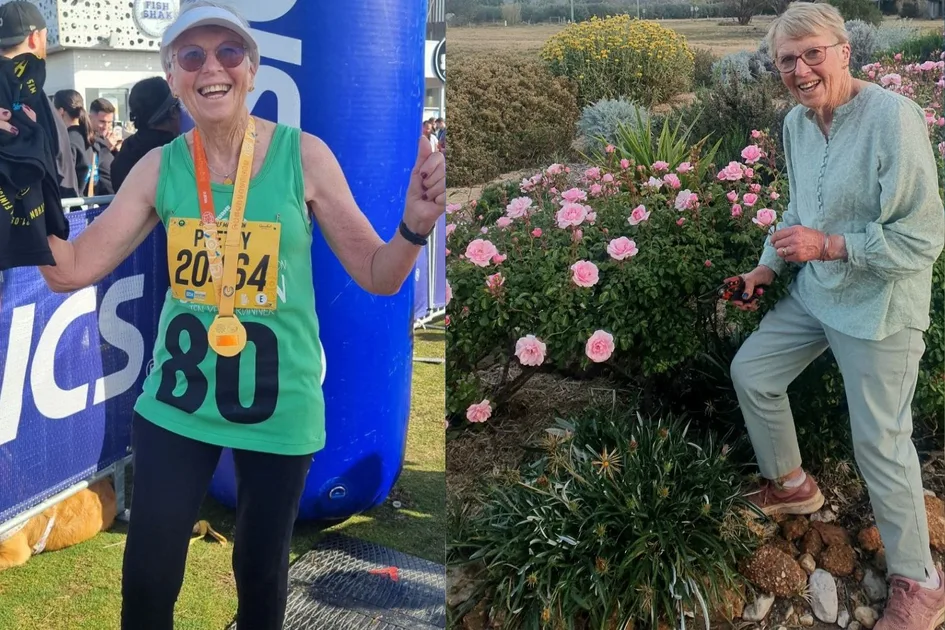
A diagnosis of Alzheimer’s Disease shocked her at first, but Heather continues to embrace an active lifestyle and says exercise is her therapy
Here Heather Cooper, 80, Maryborough, Vic tells her own story in her own words.
Weeding the garden one day, I stood up, puzzled.
Which way is the house? I wondered, confused.
In my 70s, it wasn’t the first strange thing to have happened to me recently.
I’d always loved running, but in 2017 I began feeling unsteady on my feet.
And when riding my bike, I felt wobbly.
Must be an ear infection, I thought.
But the final straw was the day I drove through a red light, forgetting I was supposed to stop.
When I realised what I’d done, I froze, heart racing.
Something was wrong. I went straight to the GP who ordered scans.
I was called back to the hospital a few days later.
‘You you have Alzheimer’s disease,’ the psychiatrist there said.
‘The MRI shows amyloid plaques in your brain.’
‘Alzheimer’s?’ I echoed, shocked.
She explained it was a common form of dementia, and a brain disorder that gradually worsened over time.
READ MORE: I survived three days under a tractor
I couldn’t believe it.
Neither could my husband, Rob, then 80, and our five adult sons, David, Andrew, Peter, Owen and Glenn.
I’d recently retired after working as a psychologist all my life.
‘You can’t have Alzheimer’s,’ everyone said, but deep down, I knew it was true.
Accepting my disease took some time.
The first thing I did was hand in my driver’s licence.
There was no way I’d risk anyone’s life on the road.
Then Rob and I went to the Dementia Australia office, where they enrolled us in a course on living with Alzheimer’s.
They gave me advice, such as taking photos to remind myself of what I’d done that day, journalling to clear mental clutter, and keeping a wall calendar.
Accepting my disease took some time.
Once I was ready, I told everyone about my diagnosis, so people could understand when I repeated myself or didn’t recognise them out of context.
In the kitchen, Rob removed cupboard doors so I could see everything at a glance.
Five years on from my diagnosis, I now write notes to remind myself to turn off the gas when I’m cooking.
I still slip up at times.
I’ve put jeans on and then found I’m still holding my undies!
Exercise remains my therapy.
I run several kilometres four times a week.
If I’m anxious about getting lost, I get unsteady and risk tripping, so I stick to a familiar route.
READ MORE: I died for eight minutes at an Adele concert
Rob even leaves water bottles along my path so that I know I’m on the right track.
I do cross-training, swim a kilometre once a week, write a column in our local newspaper, and go linedancing.
I’m certain the exercise and fresh oxygen helps rejuvenate my brain.
Despite my diagnosis, I still love life and I have eight gorgeous grandchildren to dote on.
My advice to others with Alzheimer’s is to exercise daily, socialise and prioritise sleep.
And speak about it instead of hiding it.
Once you practise acceptance, everything else falls into place.
For more information, visit Dementia.org.au
What is dementia?
Dementia is an umbrella term for a range of symptoms that result from various brain disorders.
Dementia isn’t a natural part of aging, nor is it a single condition.
The term dementia is used to describe the impact of several different medical conditions on the brain.
These conditions include Alzheimer’s disease, vascular dementia, Lewy body dementias, and others.
How dementia manifests differs for each individual, but typically it impacts memory, thinking abilities, behavior, and emotional wellbeing.
While dementia can affect anyone, it becomes significantly more prevalent in people over 65.
Dementia.org.au
Rate this article
Login to rate this article
Comments
Please login to comment
No comments yet. Be the first to comment!