
Health & Fitness
16 min read
3D Printed Fixator: Gaza Doctors Treat Severe Injuries with Local Innovation
3D Printing Industry
January 19, 2026•3 days ago
AI-Generated SummaryAuto-generated
A new 3D-printed external fixator, manufactured locally in Gaza using recycled materials and solar power, is helping doctors treat severe fractures. This locally produced device bypasses import difficulties and high costs, enabling treatment for patients who might otherwise face amputation. The open-source design aims to build local capacity for essential medical equipment production in resource-constrained environments.
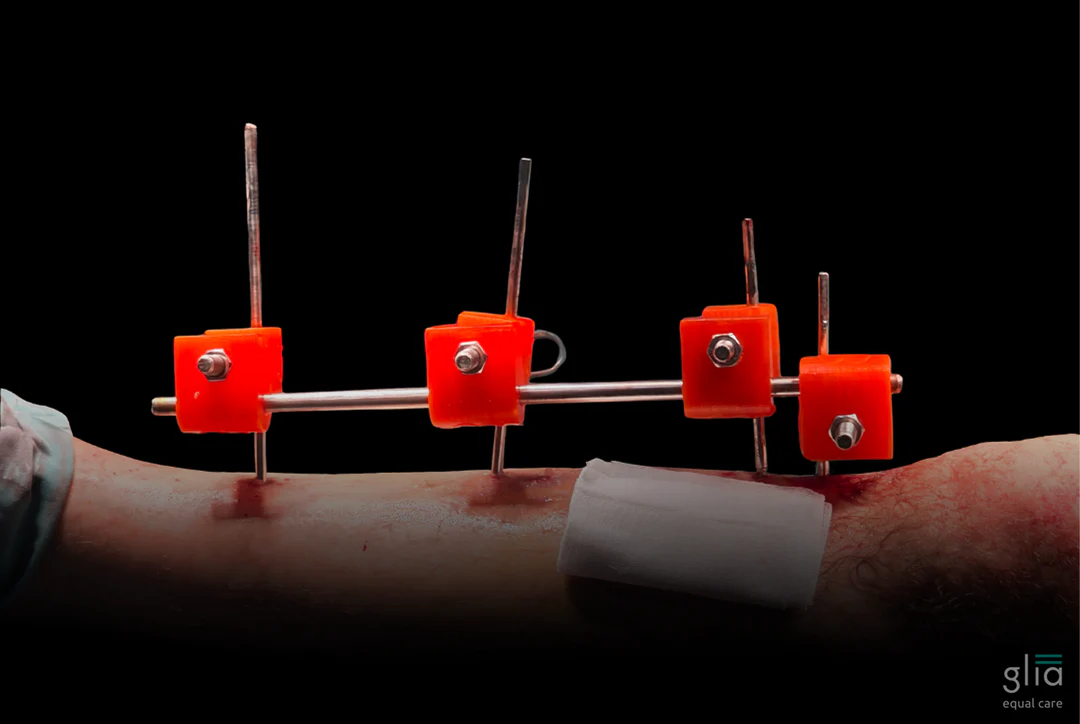
Open-source medical device developer Glia has produced and used an external fixator for severe fractures that is designed and manufactured inside the territory, using locally available resources.
Used to stabilize complex bone injuries, the device is normally imported, typically costs more than $500, and depends on established supply chains and reliable power. In Gaza, where more than 90% of health facilities have been damaged or destroyed and hospitals operate with severely constrained electricity and logistics, such equipment has become difficult or impossible to obtain.
Against that backdrop, the open-source developer says the locally made fixator is intended to fill a gap that has become increasingly hard to bridge.
“The blockade must end. Until then, I am constantly surprised at the perseverance and steadfastness of Palestinian doctors and health care workers. They will do everything possible to improve care for their patients,” said Dr. Ghassan Abu Sittah, Reconstructive Surgeon and Professor of Conflict Medicine at the American University of Beirut.
Manufacturing orthopedic devices under siege
The fixator produced by Glia relies on a mix of 3D printed components, recycled plastic materials, and equipment powered by solar energy. The organization says this setup allows production to continue even in the absence of a stable power grid and regular access to imported supplies.
Manufacturing can be done locally and relatively quickly, a factor that matters in treating severe fractures where the risk of infection and other complications increases with time.
The project did not begin from scratch. Earlier work in collaboration with Imperial College London (ICL), focused on designing and testing initial versions of 3D printed components. That research has since been adapted by Palestinian doctors and engineers working in Gaza, many of whom have long experience practicing medicine and engineering in low resource environments.
According to Glia, three patients have received the locally produced fixator since August 2025. The organization says these patients were recovering with restored limb function and have avoided amputation. As of November last year, another twelve patients were waiting to be treated using the same device.
The design of the fixator has been released as open source, meaning it can be reproduced or adapted elsewhere. Glia says this is intended to make the approach usable in other places facing similar constraints, whether due to conflict, disasters, or weak infrastructure.
The organization states that the project was co-designed, prototyped, and manufactured by Palestinian engineers and medical staff working across Gaza, Canada, and the United Kingdom, using tools and materials considered realistically accessible under current conditions.
Rather than presenting the work as a temporary workaround, Glia describes it as an effort to build local technical capacity to produce essential medical equipment when imports are unavailable.
Glia is currently seeking donations to support the continuation and expansion of the project through a fundraising campaign hosted on Launchgood.
Additive manufacturing in humanitarian care
3D printed prosthetic and medical devices have already seen use in crisis and conflict zones. For instance, prosthetic 3D printing specialist Open Bionics delivered its 3D printed Hero Arm prostheses to a treatment facility in Germany for Ukrainian soldiers injured by landmines. Manufactured in the UK, the myoelectric device was controlled by sensors in the forearm and featured a movable thumb and articulated fingers that enabled multi grip grasping.
Lightweight and customizable, the prosthesis had previously undergone clinical evaluation and was already in wider clinical use. It signaled that clinically validated, 3D printed myoelectric prosthetics were mature enough to be rapidly deployed and fitted in frontline humanitarian and conflict related rehabilitation settings, not just in conventional healthcare systems.
More than a decade ago, Not Impossible Labs established a 3D printing lab in a Sudanese refugee camp to produce prosthetic arms for amputees, beginning with a 14 year old blast victim. The project trained local doctors to use 3D printers and basic computer tools, enabling prosthetics to be fabricated on site at a rate of about one arm per week.
This initiative built on the lab’s earlier work on the open source, low cost Eye Writer device and demonstrated a model for locally manufactured, accessible assistive technologies based on shared designs and knowledge.
The 3D Printing Industry Awards are back. Make your nominations now.
Do you operate a 3D printing start-up? Reach readers, potential investors, and customers with the 3D Printing Industry Start-up of Year competition.
To stay up to date with the latest 3D printing news, don’t forget to subscribe to the 3D Printing Industry newsletter or follow us on LinkedIn.
While you’re here, why not subscribe to our Youtube channel? Featuring discussion, debriefs, video shorts, and webinar replays.
Featured image shows 3D printed external fixator. Photo via Glia.
Rate this article
Login to rate this article
Comments
Please login to comment
No comments yet. Be the first to comment!