
Technology
7 min read
Revolutionary 3D Printed Bone Implants: Advanced Manufacturing Unveiled
Australian Manufacturing
January 21, 2026•1 day ago
AI-Generated SummaryAuto-generated
Researchers have developed a new 3D-printed bone implant, or scaffold, designed to mimic natural bone structure. Made from biodegradable polylactic acid, these porous structures support bone regrowth and dissolve after healing, eliminating removal surgeries. Laboratory tests show promising performance under impact and for fluid permeability. While not yet ready for clinical use, the technology could revolutionize personalized medical devices and improve fracture treatment within five years.
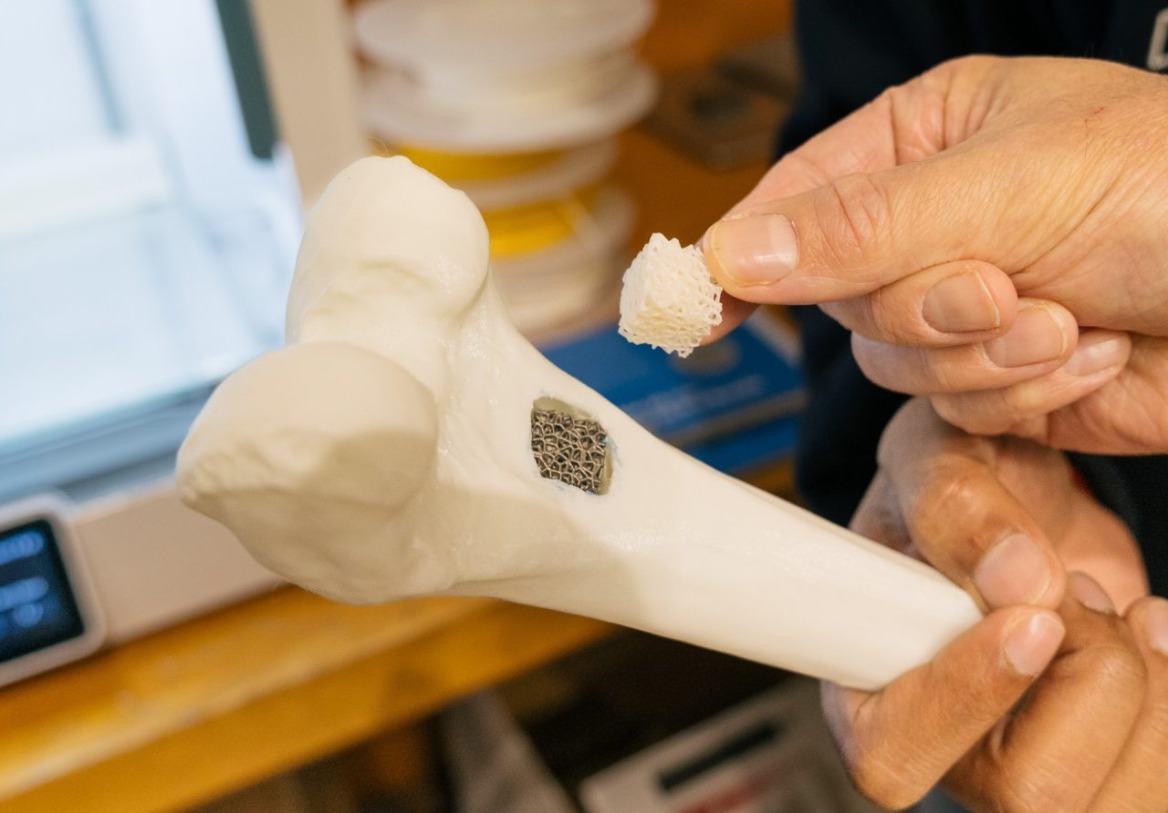
UNSW Canberra researchers have developed a new 3D-printed bone implant that could transform the manufacturing of personalised medical devices and improve treatment for fractures and bone injuries.
According to UNSW, the implants, known as bone scaffolds, are porous structures that support bone regrowth.
Made from biodegradable polylactic acid (PLA), they provide a temporary framework for cells to attach and regenerate tissue, dissolving safely once healing is complete. This eliminates the need for additional surgeries to remove implants, the researchers noted.
“Bone can be damaged in many locations, and its structure changes depending on where it is in the body,” said PhD student Kaushik Raj Pyla, who led the research at UNSW Canberra.
“We wanted to see if matching these patterns could help restoration. Our idea was to take existing bone patterns and check if they could be rebuilt through printing.”
UNSW researchers used irregular, stochastic lattice designs to more closely replicate natural bone structure.
Laboratory tests showed the scaffolds performed well under sudden impacts, absorbing energy efficiently, while maintaining fluid permeability critical for tissue regeneration.
The university noted that innovative bone repair solutions are urgently needed, particularly in the ACT, where poor bone health affects more than 98,000 people.
“These figures highlight the growing burden of osteoporosis and fracture-related injuries – and the importance of developing safer, more effective treatments like the 3D-printed bone scaffolds,” Kaushik said.
UNSW researchers cautioned that the technology is not yet ready for clinical use. Future steps include biological testing, long-term studies, and regulatory approval.
The team said it is also exploring applications for cartilage and soft tissue scaffolds, with early clinical testing possible within five years.
“Biodegradable scaffolds will likely play a key role in reducing both medical risks and overall treatment costs,” Kaushik said. “We’re moving toward safer, more personalised implants that work with the body, not just in it.”
Rate this article
Login to rate this article
Comments
Please login to comment
No comments yet. Be the first to comment!